Monday, October 12, 2026
SUBSCRIBE
22 GLOBAL MEDIA AWARDS
Food For Mzansi
  • News
  • Changemakers
  • Lifestyle
  • Farmer’s Inside Track
  • Food for Thought
No Result
View All Result
  • News
  • Changemakers
  • Lifestyle
  • Farmer’s Inside Track
  • Food for Thought
No Result
View All Result
Food For Mzansi
No Result
View All Result
in Community Food Gardens, It Takes a Village

Abalimi embodies ‘harvest of hope’ on the Cape Flats

by Sinesipho Tom
5th February 2021
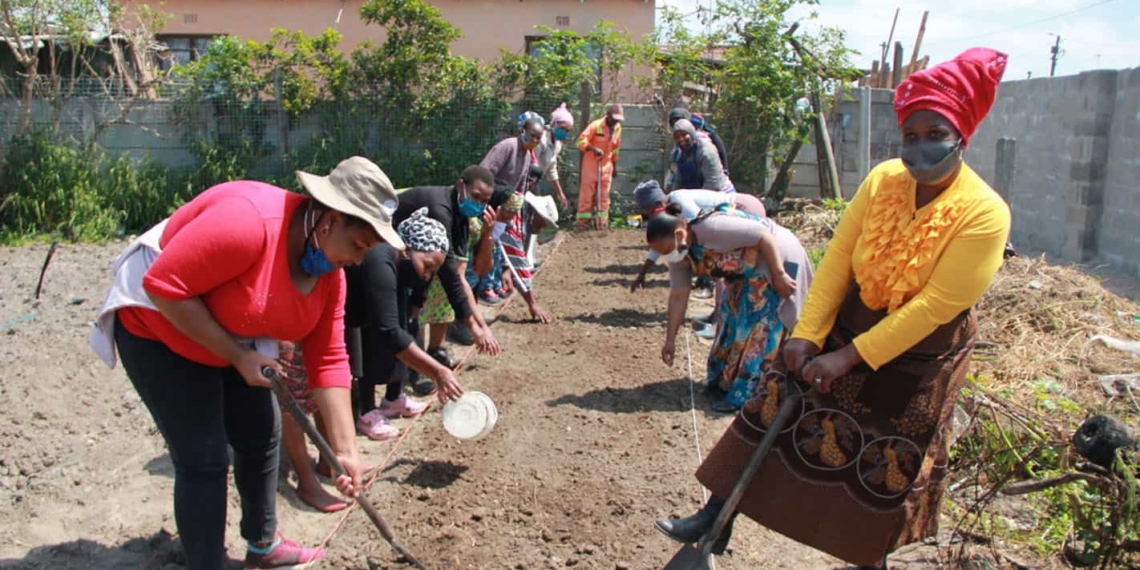
Non-profit micro-farming organisation Abalimi Bezekhaya teaches over 2 000 impoverished people from townships in Cape Town to plant their own vegetable gardens to supplement their existing, inadequate supply of food. Photo: Supplied/Food For Mzansi

Non-profit micro-farming organisation Abalimi Bezekhaya teaches over 2 000 impoverished people from townships in Cape Town to plant their own vegetable gardens to supplement their existing, inadequate supply of food. Photo: Supplied/Food For Mzansi

Share on FacebookShare on TwitterShare on WhatsApp

It is said that the first component of social justice is adequate food for all. But what happens when you live in a country that has a population of nearly 59 million, but nearly half of them live below the poverty line? Abalimi Bezekhaya might have the answer.

For this non-profit micro-farming organisation, whose isiXhosa name means “Farmers of the home”, the solution is to teach a man how to fish… And we all know how that adage goes.

Abalimi Bezekhaya was first established in 1982, and has been assisting impoverished groups and communities on the Cape Flats for 39 years now.

The organisation provides basic, human necessities for indigent people. This enables them to supplement their existing, inadequate supply of food and create their own livelihoods.

Grace Stead, interim managing director and board member Abalimi Bezekhaya. Photo Supplied/Food For Mzansi

Grace Stead, interim managing director and board member of Abalimi Bezekhaya, says the organisation’s services are not limited to any particular age group.

“We have got youngsters as old as eight and nine years old who work with their grandparents in the gardens, and members up to 55,” she says.

Stead adds that those under the age of 35 are increasingly coming forward to learn about gardening, which she finds very encouraging.

Over all, the organisation assists close to 2 000 people per year, and with their two gardens located in the townships of Khayelitsha and Nyanga they provide support and training to small-scale farmers, micro-farmers and garden owners.

ALSO READ: Youth turn Soweto dumping site into food garden

Garden centres of hope

Abalimi also provides extension services to community members with home visits to teach people how to grow their own vegetables organically.

“Our garden centres in Khayelitsha and Nyanga are like mini-nurseries or agri-hubs. You can actually go there and buy your seedlings, get advice and even buy manure.”

Abalimi Bezekhaya has two gardens, one in Khayelitsha and another in Nyanga where it provides support and training to small-scale farmers, micro farmers and garden owners in the townships. Photo:Supplied/Food For Mzansi

That is also where they do training using a demonstration garden. People can buy vegetables directly from the garden centre.

Stead says that the centres are open to everyone, from schools, crèches to garden owners and farmers.

Training in urban agriculture

Abalimi offers different types of training, says Stead.

“The one is what we call the three-day basic urban agriculture course. That’s really just teaching people how to grow their own vegetables in their own home.

“We teach them how to prepare the beds, how to water their crops, how to harvest and when to plant.”

The second type of training comes in the form of workshops.

“Throughout the year the organisation offers farmer workshops with different focuses, including crop rotation, soil building and pest or quality control. The workshop is open to anyone who is interested.”

The training in Abalimi is mainly done in isiXhosa by 12 trainers. Stead explains that trainees can attend as many courses as they like.

“The full cost for the courses is about R1 000 for basic training, but for the people in the townships and the unemployed we can make it available at R70. The organisation subsidises people who really want to do it, but can’t afford it,” she says.

Abalimi Bezekhaya also provides extension services to community members with home visits to teach people how to grow their own vegetables organically. Photo:Supplied/Food For Mzansi

During their more than three decades of working with farmers and community gardeners, they’ve developed a very good understanding of the challenges people face.

She says the biggest challenge that farmers face is access to land and water.

“That’s what the farmers battle with the most. There is not a lot of land available and it is sometimes difficult to get a lease agreement and funding from the department of agriculture.

“Getting that all in place can take quite a while and can be quite difficult,” she says.

The other main challenge is access to water, because municipal water is very expensive. The farmers need to get a borehole, which is expensive to sink and needs electricity to run.

eight- and nine-year-oldS work ALONGSIDE their grandparents in the ABALIMI BEZEKHAYA gardens.

In the area that Abalimi serves, manure is a precious commodity for a gardener and a farmer.

“The soil in the Cape Flats is very sandy. You need to have composted manure to actually feed the soil, otherwise there is not enough nutrients,” she says.

Flourishing despite pandemic

However challenging 2020 was amidst the Covid-19 pandemic, she says that Abalimi stood strong.

They were recognised as an essential service because they provide vegetables and supported the farmers by doing manure runs.

“We filled our bakkies with manure and seedlings and we went out into the community to sell the resources, which would then enable them to plant their own vegetables gardens.

“That was very successful, and we have even partnered with the department of agriculture to provide training specifically for household gardening.”

Abalimi fills bakkies with manure and seedlings and they go out into the community to sell the resources to farmers and gardeners. Photo: Supplied/Food For Mzansi

Stead says that what she does, fulfills and motivates her. There’s nothing else she would rather be doing.

“What I always find amazing to see are these really beautifully grown vegetables that come out of extremely sandy soil.

“It just amazes me how people under really difficult circumstances manage to grow such amazing, healthy vegetables. That is the main reason for continuing what I do.”

ALSO READ: 44 kids feed 900 families in ‘Middelpos fairy tale’

Sinesipho Tom

Sinesipho Tom is an audience engagement journalist at Food for Mzansi. Before joining the team, she worked in financial and business news at Media24. She has an appetite for news reporting and has written articles for Business Insider, Fin24 and Parent 24. If you could describe Sinesipho in a sentence you would say that she is a small-town girl with big, big dreams.

Tags: Abalimi BezekhayaCape TownCommunity food gardenstraining
Govt gives Land Bank money for blended finance
News

Hope restored as Land Bank secures R500m to end funding freeze

by Olwam Mnyande
9th October 2026

The department of rural development and Land Reform has signed an agreement with Land Bank, committing R500m in grant funding...

Read moreDetails
Young Lady Grey farmer diversifies from broilers to shisanyama

Young Lady Grey farmer diversifies from broilers to shisanyama

9th October 2026
Four major risks SA farmers can’t afford to ignore

Four major risks SA farmers can’t afford to ignore

9th October 2026
Scrapping the sugar tax is key for survival of the sugarcane industry.

Scrap sugar tax to save farmers and jobs, SA Canegrowers plead

9th October 2026

Phelisa Ndayi brings soil science and smart tech to Mzansi farmers

8th October 2026

Unlocking the economic and nutritional power of the fifth quarter

This week’s agri events: 12 – 16 October

Crucial management habits every livestock farmer must practice

Prepare your livestock for a drier 2026/27 breeding season

Energy shock, weather risks drive operational costs for SA farmers

Join Food For Mzansi's WhatsApp channel for the latest updates!

JOIN NOW!
Next Post

Can this farmer win back his wife’s heart?

THE NEW FACE OF SOUTH AFRICAN AGRICULTURE

With 21 global awards in the first six years of its existence, Food For Mzansi is much more than an agriculture publication. It is a movement, unashamedly saluting the unsung heroes of South African agriculture. We believe in the power of agriculture to promote nation building and social cohesion by telling stories that are often overlooked by broader society.

The numbers every farmer should know

Palesa proves small-scale farming can feed communities, retailers

Protect your spinach crops from extreme heat this summer

This week’s agri events: 12 – 16 October

From five fish to a commercial farm: Meet the AWSA !Xhariep winners

Booberries campaign brings breast health to Checkers shelves

  • Awards & Global Impact
  • Our Story
  • Contact Us
  • Cookie Policy
  • Privacy Policy
  • Copyright

Contact us
Office: +27 21 879 1824
News: info@foodformzansi.co.za
Advertising: sales@foodformzansi.co.za

Contact us
Office: +27 21 879 1824
News: info@foodformzansi.co.za
Advertising: sales@foodformzansi.co.za

  • Awards & Global Impact
  • Our Story
  • Contact Us
  • Cookie Policy
  • Privacy Policy
  • Copyright

Chat Options

I'm Lerato, your AI assistant!
No Result
View All Result
  • News
  • Changemakers
  • Lifestyle
  • Farmer’s Inside Track
  • Food for Thought

Copyright © 2024 Food for Mzansi