Monday, October 12, 2026
SUBSCRIBE
22 GLOBAL MEDIA AWARDS
Food For Mzansi
  • News
  • Changemakers
  • Lifestyle
  • Farmer’s Inside Track
  • Food for Thought
No Result
View All Result
  • News
  • Changemakers
  • Lifestyle
  • Farmer’s Inside Track
  • Food for Thought
No Result
View All Result
Food For Mzansi
No Result
View All Result
in Between the Headlines, Commercial Farmer, Food for Thought, Mentors

Cotton by-products promise opportunities for Africa

by Chantélle Hartebeest
12th June 2019
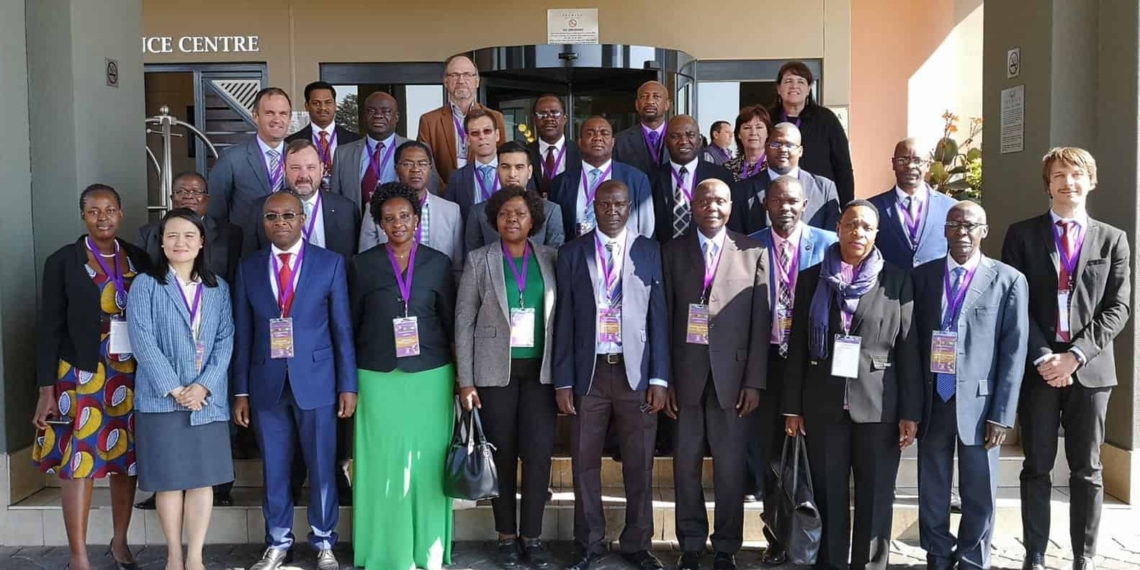
National and international Cotton experts attending the Cotton by-product workshop in South Africa.

National and international Cotton experts attending the Cotton by-product workshop in South Africa.

Share on FacebookShare on TwitterShare on WhatsApp

Cotton by-products hold valuable opportunities for farmers in Eastern and Southern Africa. Developing these opportunities could make a huge contribution towards diversifying the subcontinents’ economies.

This was the take-away message from a workshop recently hosted in Johannesburg by Cotton SA, a body that represents all role-players in the South African cotton industry, and the United Nations Conference on Trade and Development (UNCTAD).

The two-day workshop drew 70 attendees, of which 50 were from outside of Mzansi. It was centred around the project Promoting cotton by-products in Eastern and Southern Africa, which is managed by UNCTAD, in partnership with the United Nations Economic Commission for Africa (UNECA) and Common Market for Eastern and Southern Africa (COMESA).

Joseph Kempen, Loskop Cotton Gin CEO (SA), Dr Lawrence Owoeye Senior Research Manager, IIC-ARC (SA) and Mr. Kai Hughes, Executive Director International Cotton Advisory Committee (USA).
Joseph Kempen, Loskop Cotton Gin CEO (SA), Dr Lawrence Owoeye, Senior Research Manager: IIC-ARC (SA), and Mr. Kai Hughes, Executive Director International Cotton Advisory Committee (USA).

According to Mr. Stephen Karingi, UNECA Director of Regional Integration and Trade, the project is aligned with regional and global efforts to support Africa’s economic diversification through value addition. “The importance of the cotton sector to African economies cannot be overemphasised, and it includes the value chain from seed cotton to textiles and other by-products such as cottonseed oil and seedcake.”

The three-year programme spans across four African countries namely Zambia, Tanzania, Zimbabwe and Uganda. These countries are also known as the ‘Cotton-4’.

By-products refers to the waste of cotton production, which is recycled into another product. For instance, fuel briquettes are made from cotton stalks and absorbent cotton from waste fibres.

“Cotton farming is a high input cost crop and therefore every possible opportunity to increase the value of cotton must be investigated at farm level.” – Hennie Bruwer, Cotton SA CEO

He added, “Through value addition of cotton by-products such as briquettes and pellets made from cotton stalks, hygienic cotton products such as absorbent cotton, and utilizing cottonseed oil, new opportunities can be created that can contribute to the profitability of cotton and job creation at farm level.”

Amid the discussion, experts at the workshop reflected on the potential for cotton by-products and how it would contribute to sustainable development in African cotton-producing countries. The round table discussions focused on high level topics such as national level challenges, government policies, knowledge and technology required for manufacturing identified cotton by-products. Delegates from the “Cotton-4” also shared some of the lessons they have learnt.

“There was an openness between the parties involved. This openness is very powerful to grow the industry going forwards,” says Yanchun Zhang, chief of UNCTAD’s commodities branch.

Cotton SA's chief executive officer Hennie Bruwer.
Cotton SA’s chief executive officer Hennie Bruwer.

As the three-year programme comes to an end, there are two ways in which the future can be approached, says Kris Terauds UNCTAD’s economic affairs officer.

“The first is, to take commercial niches that were developed in the countries and accompany them as best we can in finding new partners, in finding the help needed to implement those initiatives.

“The second is, we now have a joint initiative with two other trade institutions both in Geneva – the World Trade Organisation (WTO) and the International Trade Centre (ITC). Together we’ve been trying to coordinate our technical assistance activities on cotton by-products.”

He adds that this new initiative will be able to take up some of the ideas that have been developed to carry the project further.

Cotton SA is a Food For Mzansi partner. Our work is supported by the contributions of our partners, who have no right of control over editorial content. Read more on our Partners page.
Chantélle Hartebeest

CHANTÉLLE HARTEBEEST is a young journalist who has a fiery passion for storytelling. She is eager to be the voice of the voiceless and has worked in both radio and print media before joining Food For Mzansi.

Tags: Cotton SAJohannesburgWorld Trade Organisation (WTO)
Young Lady Grey farmer diversifies from broilers to shisanyama
Inspiration

Young Lady Grey farmer diversifies from broilers to shisanyama

by Vateka Halile
9th October 2026

“All 360 eggs got rotten. I didn’t know what I was doing.” After his first incubator attempt failed, Thando Soroshi...

Read moreDetails
Four major risks SA farmers can’t afford to ignore

Four major risks SA farmers can’t afford to ignore

9th October 2026
Scrapping the sugar tax is key for survival of the sugarcane industry.

Scrap sugar tax to save farmers and jobs, SA Canegrowers plead

9th October 2026

Phelisa Ndayi brings soil science and smart tech to Mzansi farmers

8th October 2026

Agri Skills Transfer: Where agriculture meets opportunity

8th October 2026

Scrap sugar tax to save farmers and jobs, SA Canegrowers plead

From five fish to a commercial farm: Meet the AWSA !Xhariep winners

NW government boosts Taung lucerne farmers with new packhouse

Energy shock, weather risks drive operational costs for SA farmers

Veggie prices: Rising supply could bring relief to SA shoppers

Join Food For Mzansi's WhatsApp channel for the latest updates!

JOIN NOW!
Next Post
Join Food For Mzansi's free panel talk on Friday, 14 June 2019 at 18:30 at the Adam Small Theatre Complex in Stellenbosch.

All-female Power Talk promises to be woke…

THE NEW FACE OF SOUTH AFRICAN AGRICULTURE

With 21 global awards in the first six years of its existence, Food For Mzansi is much more than an agriculture publication. It is a movement, unashamedly saluting the unsung heroes of South African agriculture. We believe in the power of agriculture to promote nation building and social cohesion by telling stories that are often overlooked by broader society.

Palesa proves small-scale farming can feed communities, retailers

Protect your spinach crops from extreme heat this summer

This week’s agri events: 12 – 16 October

From five fish to a commercial farm: Meet the AWSA !Xhariep winners

Booberries campaign brings breast health to Checkers shelves

Crucial management habits every livestock farmer must practice

  • Awards & Global Impact
  • Our Story
  • Contact Us
  • Cookie Policy
  • Privacy Policy
  • Copyright

Contact us
Office: +27 21 879 1824
News: info@foodformzansi.co.za
Advertising: sales@foodformzansi.co.za

Contact us
Office: +27 21 879 1824
News: info@foodformzansi.co.za
Advertising: sales@foodformzansi.co.za

  • Awards & Global Impact
  • Our Story
  • Contact Us
  • Cookie Policy
  • Privacy Policy
  • Copyright

Chat Options

I'm Lerato, your AI assistant!
No Result
View All Result
  • News
  • Changemakers
  • Lifestyle
  • Farmer’s Inside Track
  • Food for Thought

Copyright © 2024 Food for Mzansi