Saturday, April 18, 2026
SUBSCRIBE
21 GLOBAL MEDIA AWARDS
Food For Mzansi
  • News
  • Changemakers
  • Lifestyle
  • Farmer’s Inside Track
  • Food for Thought
No Result
View All Result
  • News
  • Changemakers
  • Lifestyle
  • Farmer’s Inside Track
  • Food for Thought
No Result
View All Result
Food For Mzansi
No Result
View All Result
in Lifestyle, Mzansi Flavour

Lean, local, lekker: Ostrich meat makes its mark

Braai it, stew it, or make it into biltong – ostrich meat is the lean red meat South Africans didn’t know they needed. It’s packed with flavour and super high in protein. Get expert tips on how to cook it to perfection

by Vateka Halile
15th August 2025
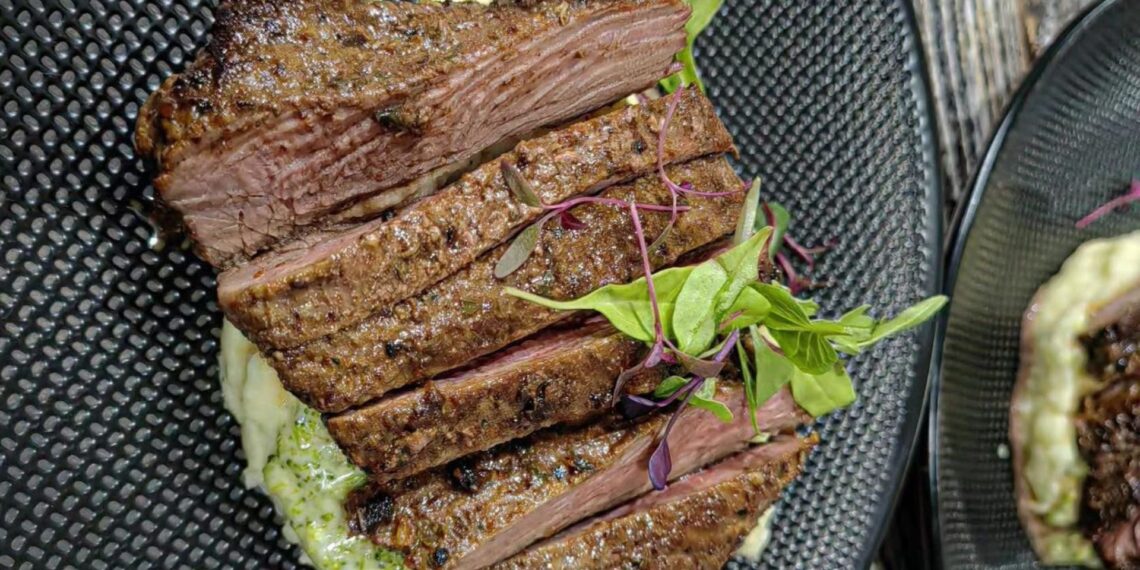
Although ostrich meat looks like beef, it is leaner, lower in fat, and easier to cook. Photo: Supplied/Food For Mzansi

Although ostrich meat looks like beef, it is leaner, lower in fat, and easier to cook. Photo: Supplied/Food For Mzansi

Share on FacebookShare on TwitterShare on WhatsApp

In Mzansi, we love our meat. Whether it’s on the braai, in a stew, or packed in a lunchbox. But sometimes, a little change goes a long way. That’s where ostrich meat comes in. 

It’s not your everyday choice, sure. However, it’s soft, flavourful and one of the healthiest meats you can eat because it is high in protein and low in fat. 

Ostrich meat is lekker in a stew or on the grill, or turn it into biltong at home. Once you’ve had it, you’ll want to keep it on your grocery list. 

Tasty, tender, and nutritious

Chef Mbasa Brook, based in Parktown, Johannesburg, says the best way to prepare ostrich fillet is by pan-searing it. This method works well because it locks in the juices, keeping the meat moist. 

To keep it nice and tender, he adds, a 500g fillet steak at room temperature should take about six minutes to cook, three minutes on each side.

If you are looking for the perfect sauce to pair with ostrich meat, chef Mbasa Brook recommends a rich and creamy mushroom sauce. Photo: Supplied/Food For Mzansi

“Always make sure to let it rest for five to ten minutes after cooking. This is where many people go wrong. They cut it too soon.”

Mbasa Brook

Brook explains that with ostrich meat, the key is cutting against the grain. This helps loosen the muscle fibres, making the meat more tender and easier to chew.

As for seasoning, you do not need much. He says salt, pepper, rosemary or thyme work beautifully with ostrich fillet. 

READ NEXT: Ostrich farming: The good, the bad, and the profitable

Big bird, big flavour

Tshwane-based chef Thole Mathe tells Food For Mzansi that ostrich meat is often mistaken for beef because of its deep red colour and steak-like look when cooked.

“Ostrich is a very lean red meat with much less saturated fat than beef,” he says.

According to Mathe, ostrich meat is a versatile ingredient that works well in dishes like bobotie, potjie, stews, goulash and even wors.

Chef Thole Mathe says preparing ostrich is quick and easy, making it perfect even for those last-minute occasions. Photo: Supplied/Food For Mzansi

For flavour, he recommends marinating ostrich meat with a mix of Worcestershire sauce, garlic powder, ground pepper, sea salt, smoked paprika, butter and olive oil. He prefers cooking it at room temperature, using salted butter, fresh thyme and rosemary for added aroma.

“A non-stick or grill pan on high heat works best,” he advises. “Cook for two minutes per side and serve with a good wine pairing for a classic, elegant meal.”

Timing is everything

Chef Pitso Qwabe, founder of Jazz Friends in eSwatini, says the key to cooking ostrich meat is getting the timing right. It should not be too rare and also not overdone to keep it from drying out.

She explains that ostrich can be used in many ways, from kebabs and roasts to mince, meatballs, bolognese or meatloaf. Because it is lean meat, there is no excess fat to drain.

Chef Poitso Qwabe says ostrich meat opens up a world of possibilities, from kebabs to meatballs and meatloaf. Photo: Supplied/Food For Mzansi

“Fresh herbs work beautifully with ostrich meat, adding real aroma and flavour. Oregano and bay leaves bring a lovely depth, especially in stews or potjies.”

Pitso Qwabe

Qwabe adds that fillets are great for salads, wraps or sandwich fillings.

Meanwhile, Polokwane-based registered dietitian Kulani Mtileni, founder of Dietitians 24, says ostrich meat offers several health benefits, mainly because it is low in fat and cholesterol.

READ NEXT: The long and short of ostrich farming

Full of goodness

Mtileni explains that ostrich is high in protein, rich in iron and zinc, and provides a good amount of B vitamins and selenium.
“It contains a significant amount of selenium, an antioxidant that helps protect cells from damage and may reduce inflammation,” he says.

Mtileni adds that ostrich meat is well-suited for people following keto, paleo, or low-carb diets because of its low fat, low-carbohydrate, and high-protein profile.


“Ostrich has less fat than beef and a similar calorie count to chicken”.

Kulani Mtileni

“It’s also a good alternative for those with alpha-gal allergies, as it isn’t a mammalian meat,” he explains.

Ostrich meat is lean and packed with protein, a great choice if you want something healthy. Photo: Supplied/Food For Mzansi

He notes that it also contains less sodium than other meats such as turkey and venison, which can be beneficial for heart health.

Other ostrich products

Kabelo Lekalakala, the founder of Pitso Ostrich Farm based in Brits, North West, says that if you are looking for the right breed for meat, the native black-neck ostrich is ideal for both meat consumption and leather quality.

He explains that this is especially true when they are slaughtered at around 10 months of age, as tenderness and quality are at their prime then.
“A balanced nutritional diet mainly made up of bran, carbohydrates, fibre, and protein will ensure healthy ostrich growth without the need for hormonal control. This results in meat that is close to organic,” he says.

Kabelo Lekalakala is an ostrich farmer based in Brits, North West. Photo: Supplied/Food For Mzansi

He tells Food For Mzansi that ostrich products after slaughter mainly include meat, leather and feathers.


“Beyond that, ostrich eggs are also consumed for baking, breakfast and food flavouring. So ostrich by-products also hold value for both trade and consumption.”

Lekalakala adds that Pitso Ostrich Farm is on a mission to promote local ostrich meat, especially as there are policy proposals in place to scale up game meat products in retail stores. The farm positions itself to meaningfully participate in this space by supplying a growing community of consumers who are intentional about eating lean, healthy red meat.

READ NEXT: RECIPE: Amadumbe gnocchi with an ostrich fillet

Sign-up for the latest agricultural news delivered straight to your inbox every day with Mzansi Today!

Vateka Halile

Vateka Halile grew up in rural areas of Cofimvaba in the Eastern Cape. She was raised in a traditional family setting and found writing to be a source of comfort and escape. Vateka participated in an online citizen journalism course through Food For Mzansi, and her passion for health and medicine-related stories was born. Her dedication to community work and love for social justice and solidarity spaces is evident in her quality time with the community when she isn't working.

Tags: Consumer interestInform meOstrich FarmingproteinRed meat

Related Posts

Rooibos cosmetics offer growth path for agripreneurs

Rooibos cosmetics offer growth path for agripreneurs

11th April 2026
Biosecurity to breeds: Master the art of egg production

Biosecurity to breeds: Master the art of egg production

7th April 2026

No oven needed: Easy no-bake dessert recipes

Pickled fish recipe: Tradition and taste in every bite

Why Africa’s medicinal plants are the next big agricultural export

Spekboom recipe: The ‘wonder plant’ your kitchen needs

Matcha mania: The green tea trend taking over Mzansi

Farm clinics bring healthcare closer to Cape Winelands workers

Quota errors leave small-scale fishers fighting for survival
News

Quota errors leave small-scale fishers fighting for survival

by Liezl Human
16th April 2026

West Coast small-scale fishers are fighting for survival following a series of administrative bungles by the DFFE. Despite a promised...

Read moreDetails
Strategic breeding: How Chianina genetics can boost a beef herd

Strategic breeding: How Chianina genetics can boost a beef herd

15th April 2026
More than livestock: Lesedi’s legacy in the heart of the Kalahari

More than livestock: Lesedi’s legacy in the heart of the Kalahari

15th April 2026
SA farmers resist switching to biological fertilisers – this is why

SA farmers resist switching to biological fertilisers – this is why

15th April 2026
Women in agriculture tackle markets, finance and climate risks

Women in agriculture tackle markets, finance and climate risks

15th April 2026

Farmers urged to embrace agroprocessing for growth

Five planning steps to build a profitable farming business

Sugar industry hopeful as phase 2 of master plan launches

This week’s agri events: 13 – 17 April

Biosecurity is now a make-or-break for pork producers

Join Food For Mzansi's WhatsApp channel for the latest updates!

JOIN NOW!
Next Post
Sorghum’s comeback: Why it matters now

Sorghum’s comeback: Why it matters now

THE NEW FACE OF SOUTH AFRICAN AGRICULTURE

With 21 global awards in the first six years of its existence, Food For Mzansi is much more than an agriculture publication. It is a movement, unashamedly saluting the unsung heroes of South African agriculture. We believe in the power of agriculture to promote nation building and social cohesion by telling stories that are often overlooked by broader society.

Biosecurity is now a make-or-break for pork producers

Updated plant health protocols open doors for SA citrus in China

Growing more than food: Ngxanga shapes future farmers

Five planning steps to build a profitable farming business

Why insurance brokers must speak the ‘language of the farmer’

SA’s apple industry marks 364 years with rare tree planting

  • Awards & Global Impact
  • Our Story
  • Contact Us
  • Cookie Policy
  • Privacy Policy
  • Copyright

Contact us
Office: +27 21 879 1824
News: info@foodformzansi.co.za
Advertising: sales@foodformzansi.co.za

Contact us
Office: +27 21 879 1824
News: info@foodformzansi.co.za
Advertising: sales@foodformzansi.co.za

  • Awards & Global Impact
  • Our Story
  • Contact Us
  • Cookie Policy
  • Privacy Policy
  • Copyright
No Result
View All Result
  • News
  • Changemakers
  • Lifestyle
  • Farmer’s Inside Track
  • Food for Thought

Copyright © 2024 Food for Mzansi

This website uses cookies. By continuing to use this website you are giving consent to cookies being used. Visit our Privacy and Cookie Policy.