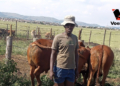
The Food For Mzansi Farmers’ Day in Polokwane, Limpopo drew close to 200 farmers eager to understand market access and industry requirements. Unlike many technical events, this one stood out by delivering farming knowledge in the local Sepedi language, ensuring every farmer was left with valuable information they could understand and implement in their farming business.
Khomotso Mashiloane, technical livestock advisor at Red Meat Industry Services (RMIS), took the stage to discuss the critical topic of market access.
“Today I spoke about market requirements because the theme of the session was about market access. I focused on differentiating between the formal and informal markets and the requirements farmers must meet to enter the formal market,” Mashiloane explained.
His presentation covered essential aspects of preparing livestock for formal markets, ensuring fair pricing, and the significance of proper animal management. Additionally, he emphasised the role of traceability in livestock farming.
“We spoke about traceability, why it is important, and why farmers should be part of the traceability system.”
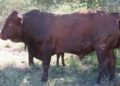
During the interactive session, farmers posed numerous questions, many centred on production.”They wanted to know the requirements for starting a feedlot, how to select bulls and heifers, and how to ensure their cattle calve annually. I also emphasised that a happy cow is a productive cow – proper animal welfare directly impacts productivity,” he added.


Technical knowledge-sharing
The farmers’ day, hosted in partnership with the Limpopo department of agriculture and rural development, also featured Professor Kgabo Pofu from the University of Limpopo who made a significant impact by presenting in Sepedi. Her presentation focused on nematodes and the extensive damage they cause to crops.
“It is very important, although difficult at times because we normally prepare our presentations in English, which is the official language. But when people receive information in their mother tongue, it makes more sense and is more acceptable,” Pofu noted.
“I highlighted the importance of handling chemicals when farmers spray their fields and explained plant parasitic nematodes, which are often misdiagnosed as nutrient deficiencies.”
Related stories
She emphasised that nematodes are minute pests, unseen by the naked eye, which makes them easy to overlook.
Pofu shed light on the rapid life cycle of nematodes and also pointed to nematodes’ ability to survive under adverse conditions through cryptobiosis. “They can become resistant to chemicals if exposed frequently, making control efforts ineffective. This is why proper sampling and management strategies are crucial.”
Pofu also shared the potential economic impact on farmers. “If nematodes are left untreated, farmers could lose up to 50% of their produce. They feed on plants, reducing growth and overall yield.”
Breaking language barriers
For many farmers in attendance, receiving technical information in their native language was a game-changer. Kgaugelo Thosaga, a Limpopo farmer and former host of Food For Mzansi’s farmers’ day in the province, expressed his gratitude for this approach.
“Receiving training in our mother tongue helped farmers relate better to the concepts. It made complex ideas more familiar, and you could see the light bulb moments. It was incredibly refreshing.”
Thosaga also noted how the event boosted farmers’ morale. “It felt like they were being seen and attended to. Seeing someone they know host the event made it more personal, allowing them to believe that farming success was within their reach.”
The host farmer, Charles Mashatola, found the day highly informative. “It gave farmers a great opportunity to network. I truly appreciate being chosen as the host,” he said.
Other organisations featured on the programme included the Small Enterprise Development and Finance Agency, Goseame Open Fresh Produce, and Viva Energy.


READ NEXT: Tembeka Ngcukaitobi joins powerhouse lineup at #FFMIndaba25
Sign up for Mzansi Today: Your daily take on the news and happenings from the agriculture value chain.