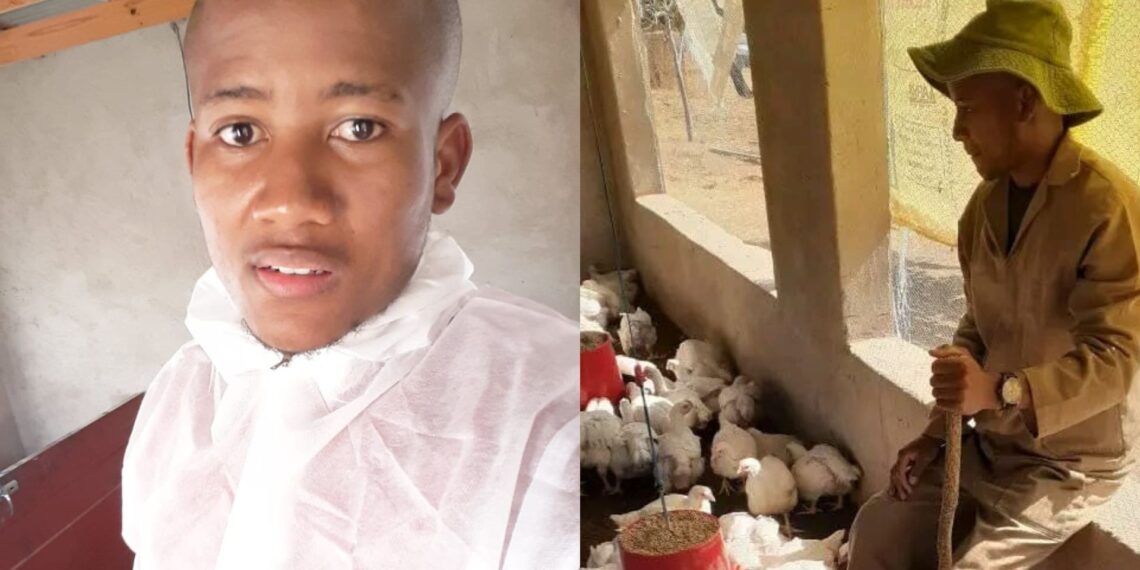
Mampshika Moloto‘s journey from backyard farming to managing a three-hectare farm is a testament to perseverance and strategic decision-making. Today, his farm in Ga Maja Matshane, Limpopo, is a carefully planned operation, where about 300 broiler chickens cluck in their enclosures, Meatmaster sheep graze nearby, and a growing herd of goats thrives under his watchful eye.
“I’m out of the backyard now,” he says proudly, surveying his land. His success is no accident – it stems from a well-thought-out approach to livestock breeding.
Moloto’s farming journey began in 2018 while he was still in high school. With financial support from his family, he started small by raising chickens in their backyard. Over time, his passion and ambition grew, leading him to expand into other livestock farming. Although he began his agricultural venture independently, he was influenced by stories of his grandfather, who was a cattle and goat farmer.
His interest in farming started even earlier – at just 15 years old, he maintained a small garden where he planted potatoes, onions, and spinach. He particularly enjoyed seeing discarded potatoes and onions sprout and multiply, sparking his fascination with plant production.
“I would take rotten potatoes and onions and plant them I loved it when I saw them growing and multiplying. But I had a love for animals that’s why I ended up farming with animals,” he says.
“I started with layers and later on introduced broilers, then goats, then invested in sheep last year, 2024.”
Strategic livestock breeding
A key factor in Moloto’s success is his approach to breeding. By crossbreeding indigenous goats with Boer goats, he ensures that his herd possesses both disease resistance and high-quality meat production.
He has developed a herd that is both hardy and productive. His philosophy is simple but effective: “Indigenous for resistance, Boer goat for meat structure.”
Moloto has also chosen Meatmaster sheep due to their exceptional adaptability, rapid growth, and ability to thrive in dry seasons, which helps reduce feed costs.
Through careful herd management and selective breeding, he is building a livestock operation that is not only sustainable but also meets market demands. His commitment to quality has earned him a loyal customer base, supplying households and neighbouring communities.
“I’ve built a solid market with my quality chicken meat,” he says. Moloto’s poultry business includes selling live broiler chickens at 35 days old, ensuring they reach market weight efficiently while maintaining quality for his customers.

Related stories
- EC teen farmer balances school and piggery business
- Thabo breeds success and herd quality with Voermol
Patience and hard work pay off
Beyond his own achievements, Moloto envisions his agribusiness as a tool for community upliftment. He hopes to create employment opportunities for young people and contribute to the fight against poverty. “I’m striving to make my business a tool to fight poverty in my community and fight unemployment among the youth.”
He believes patience is a crucial trait for anyone entering the agricultural industry. “Impatience destroys the vision of success. Be patient because farming needs serious patience.”
For Moloto, moving beyond backyard farming represents a significant milestone. “It was a win for my vision board and success in my future plans,” he says.
However, the transition came with significant challenges, especially financial constraints. Relying solely on his farming business for funding, without any external employment, made the move particularly difficult. Without stable capital, maintaining a balance and keeping the business afloat proved to be a daunting task.
His patience and perseverance were crucial in the shift from backyard farming to a larger operation.
Looking back, Moloto has few regrets, as he believes his strategic approach has brought him this far at a young age.
“I’ve been smart in business, and that’s why I’m here at an early age. The only changes I want to make are in the present and future.”
His goals extend beyond personal success; he is determined to empower young people, especially women, and expand his farming business to bring change to Maja and neighbouring villages. “I want to create opportunities in my village as an entrepreneur.”
He also encourages young farmers to remain focused on their own journey rather than being influenced by others. “Have yourself a diary to write down your ideas and plans so later you can track the process to see if you are putting effort into it or not. Every idea needs to come out through effort because what you want to achieve is through effort. Believe you can make it,” he advises.
Despite his deep-rooted love for livestock farming, he still aspires to explore crop cultivation in the future.
With a clear vision and unwavering determination, Moloto is not just building a successful farm, but creating a lasting impact on his community and inspiring the next generation of farmers.


READ NEXT: Groot Phesantekraal: Smart risks, hard work lead to lasting rewards
Sign up for Mzansi Today: Your daily take on the news and happenings from the agriculture value chain.