Saturday, October 10, 2026
SUBSCRIBE
22 GLOBAL MEDIA AWARDS
Food For Mzansi
  • News
  • Changemakers
  • Lifestyle
  • Farmer’s Inside Track
  • Food for Thought
No Result
View All Result
  • News
  • Changemakers
  • Lifestyle
  • Farmer’s Inside Track
  • Food for Thought
No Result
View All Result
Food For Mzansi
No Result
View All Result
in News

Adapt or die: Expect less rainfall, more heatwaves ahead

As rainfall diminishes in certain regions, farmers face mounting challenges in maintaining their crops and livestock. Climate scientists warn of drier weather ahead, urging farmers to adapt to changing conditions to protect their livelihoods

by Sinenhlanhla Mncwango
12th February 2024
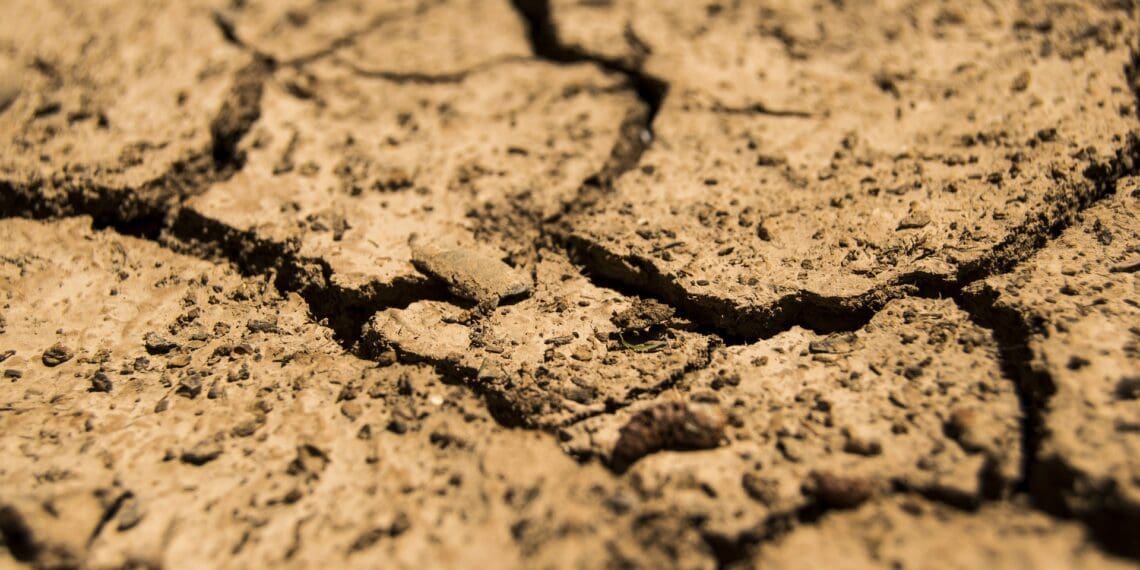
Dry, hot and dry weather conditions have been predicted for the remainder of summer and farmers have been warned to prepare their operations. Photo: Supplied/Food For Mzansi

Dry, hot and dry weather conditions have been predicted for the remainder of summer and farmers have been warned to prepare their operations. Photo: Supplied/Food For Mzansi

Share on FacebookShare on TwitterShare on WhatsApp

After weeks of consistent rainfall in certain parts of the country, farmers have been experiencing an abundant supply of water. Experts, however, warn that they should be prepared for less rainfall and drier weather conditions in the upcoming months.

University of Cape Town (UCT) climate scientist Dr Peter Johnston explained to Food For Mzansi that for the next three months, the country is not expecting above-normal rainfall. Weather conditions are more likely to be drier than wetter in the summer rainfall region of the country due to El Niño.

“All forecasts are suggesting hotter than normal, but rainfall predictions are still very uncertain and vary between above normal in some areas to below in most.

“We cannot say whether rainfall will be less than normal but we are expecting more heatwaves and thus should warn farmers to be aware of the intense heat, and to do what they can to protect crops and personnel as far as possible. The heat will be worse if the conditions are dry,” Johnston said.

Dr Peter Johnston, climate scientist and researcher at the University of Cape Town. Photo: Supplied/Food For Mzansi

BOOK NOW TO SECURE YOUR INDABA TICKET

Challenges for rain-dependent farmers

Meanwhile, North West maize farmer Tshepiso Jantjies worries that less rain will pose a challenge for his farming operations as it depends on good rainfall.

“Less rainfall affects us directly as most of our planted crops depend on rain as they were planted on dry land.

“We had rain late and the soil did not get enough water. We also have too much sun; it is very hot in a way that crops are drying out. Even those in the irrigation system do not have enough water because it is too hot,” he said.

North West grain farmer, Tshepiso Jantjies. Photo: Supplied
North West grain farmer Tshepiso Jantjies. Photo: Supplied

Jantjies fears that winter will be difficult for crop and livestock farmers who would not have had enough water for grazing and irrigation.

“In the area where we come from, it is hard to store water because there are no wetlands closer to most farmers. Now, if it is not raining at all it is bad as there is nowhere to store water,” he expressed.

Effects of less rainfall on agriculture

According to environmental advisor Dr Anthony Turton, a critical issue for agriculture when it comes to rainfall is the timing, duration, and intensity of the rainfall event.

He explained that timing is very crucial for critical moments in time when the seeds are germinating and when the roots are starting to grow because if the roots have not grown properly, the crop becomes very drought-prone.

“The duration of the rainfall event is how long it lasts, whether it is short or long. And it has big implications because it drives the flow of water in the rivers. So a longer rainfall event will put more water in the rivers than a shorter one.

“The intensity of the event is of absolute importance because if there is gentle rain over a long period of time, there might be a large volume of water over a long period of time without the effects of erosion,” Turton said.

He believes that because we are an arid country, the way to overcome this is by storing water, which has traditionally been stored in dams.

Top farmers to headline Mzansi Young Farmers Indaba

Changing to different water storage methods

Turton also warned that as the planet is becoming warmer and the country’s rainfall patterns are changing, it is not that there is less rainfall, but more intense rainfall over shorter periods.

“Aridity is the heart of the problem. As the climate is warming up, we are going to lose more to evaporation. But with the increasing temperature of water bodies, we are also going to start becoming more eutrophic where we get blue or green algae and water lettuce growing on the water,” explained Turton.

He said countries like Namibia and Botswana do well in storing their water because they do not store water in dams, but they store it in ground aquifers, which is a sophisticated process.

“These are the things that agriculture is likely to transition to in the future and you will find progressive farmers will start looking at those kinds of solutions and it depends on the geology underneath the farm,” he said.

ALSO READ: Water pollution: Contamination taking its toll

Sign up for Mzansi Today: Your daily take on the news and happenings from the agriculture value chain.

Sinenhlanhla Mncwango

Sinenhlanhla Mncwango is from a small town in KZN. She is a Journalism Honours graduate from the University of Johannesburg and has experience in online news, sports journalism and radio. She enjoys a good game of cricket and hockey and is interested in learning different languages.

Tags: Climate changeCommercialising farmerDroughtEl NinoInform meNorth WestProfessor Anthony Turton
Unlocking the economic and nutritional power of the fifth quarter
Advertorial

Unlocking the economic and nutritional power of the fifth quarter

by Lisakanya Venna
8th October 2026

PARTNER CONTENT: Maximising the fifth quarter – offal, cheeks, and trotters – is a vital strategy for South Africa’s red...

Read moreDetails
Prepare your livestock for a drier 2026/27 breeding season

Prepare your livestock for a drier 2026/27 breeding season

8th October 2026
NW government boosts Taung lucerne farmers with new packhouse

NW government boosts Taung lucerne farmers with new packhouse

8th October 2026

Veggie prices: Rising supply could bring relief to SA shoppers

7th October 2026
SADC Plant Nutrition Symposium tackles long-term soil health and farm viability

SADC Plant Nutrition Symposium tackles long-term soil health and farm viability

7th October 2026

Unlocking the economic and nutritional power of the fifth quarter

Beyond survivalist farming: The urgent need for a poultry revolution

Mastering foreign exchange: Smart strategies for SA agri exporters

Scrap sugar tax to save farmers and jobs, SA Canegrowers plead

UCT study reveals shocking pesticide exposure in farm children

Join Food For Mzansi's WhatsApp channel for the latest updates!

JOIN NOW!
Next Post

Reviving tradition: Mohaswa innovates ginger beer to a new level

THE NEW FACE OF SOUTH AFRICAN AGRICULTURE

With 21 global awards in the first six years of its existence, Food For Mzansi is much more than an agriculture publication. It is a movement, unashamedly saluting the unsung heroes of South African agriculture. We believe in the power of agriculture to promote nation building and social cohesion by telling stories that are often overlooked by broader society.

Crucial management habits every livestock farmer must practice

Energy shock, weather risks drive operational costs for SA farmers

Hope restored as Land Bank secures R500m to end funding freeze

Young Lady Grey farmer diversifies from broilers to shisanyama

Four major risks SA farmers can’t afford to ignore

Scrap sugar tax to save farmers and jobs, SA Canegrowers plead

  • Awards & Global Impact
  • Our Story
  • Contact Us
  • Cookie Policy
  • Privacy Policy
  • Copyright

Contact us
Office: +27 21 879 1824
News: info@foodformzansi.co.za
Advertising: sales@foodformzansi.co.za

Contact us
Office: +27 21 879 1824
News: info@foodformzansi.co.za
Advertising: sales@foodformzansi.co.za

  • Awards & Global Impact
  • Our Story
  • Contact Us
  • Cookie Policy
  • Privacy Policy
  • Copyright

Chat Options

I'm Lerato, your AI assistant!
No Result
View All Result
  • News
  • Changemakers
  • Lifestyle
  • Farmer’s Inside Track
  • Food for Thought

Copyright © 2024 Food for Mzansi