Wednesday, August 19, 2026
SUBSCRIBE
22 GLOBAL MEDIA AWARDS
Food For Mzansi
  • News
  • Changemakers
  • Lifestyle
  • Farmer’s Inside Track
  • Food for Thought
No Result
View All Result
  • News
  • Changemakers
  • Lifestyle
  • Farmer’s Inside Track
  • Food for Thought
No Result
View All Result
Food For Mzansi
No Result
View All Result
in News

Market knowledge is the new superpower for SA farmers

South African farmers are master producers, but many struggle to survive as mere “price takers”. Industry experts explain why mastering market intelligence, understanding production costs, and shifting from primary producers to savvy agripreneurs is the key to unlocking real profitability and negotiation power

by Patricia Tembo
1st July 2026
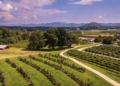
Stronger business skills, diversified income streams and improved market access are helping South African farmers strengthen their bargaining power, improve profitability and build more resilient farming businesses. Photo: Pexels

Stronger business skills, diversified income streams and improved market access are helping South African farmers strengthen their bargaining power, improve profitability and build more resilient farming businesses. Photo: Pexels

Share on FacebookShare on TwitterShare on WhatsApp

South African farmers need stronger market knowledge, better business skills and diversified income streams to improve profitability and reduce their reliance on being price takers.

According to Limpopo farmer and agripreneur Matjee Mokgoadi, many farmers produce quality crops but lack the skills and information needed to negotiate effectively.

“From my experience working with farmers and as a farmer myself, many farmers are not yet fully equipped to negotiate prices effectively.

The challenge is not only production; many farmers can produce good quality crops, but the ability to understand the market, calculate production costs, access market information, and engage buyers from a position of strength,” Mokgoadi said.

How to strengthen market position

He added that many emerging farmers work individually, which limits their bargaining power and often forces them to accept prices that do not reflect their production costs.

Mokgoadi believes farmers need stronger support in market intelligence, financial literacy, record-keeping, cooperative development and understanding value chains.

“This is why my work focuses not only on production, but also on helping farmers build systems around their businesses – because a farmer who understands their numbers and their market is in a better position to negotiate,” he said.


Related stories
  • Organic certification: A gateway to premium markets
  • Tomato price debate: Joburg Market, RSA Group weigh in
  • Tomato farmers squeezed as Joburg Market leads price shocks
  • Hopa brings hope and market access to EC grassroots farmers

Mokgoadi said farmers should move beyond simply accepting market prices.

“Farmers should not see themselves only as price takers. Agriculture is a business, and like any business, farmers need to understand their value and negotiate where possible.”

While acknowledging that supply and demand influence prices, Mokgoadi said farmers can strengthen their market position through collective action, better planning, stronger market linkages and value addition. He added that the future of agriculture depends on farmers evolving beyond primary production to become agripreneurs with a sound understanding of production, business and markets.

Diversification improves resilience

Gauteng livestock farmer Simphiwe Hlubi said modern farmers need multiple revenue streams to remain financially sustainable.

“I think it’s very key that you have multiple revenue streams that you would generate, especially from the farming operation, because just one thing, you cannot survive doing just one thing.”

While his farm breeds goats, he said the enterprise alone cannot cover ongoing operational costs.

While acknowledging that supply and demand influence prices, Hlubi said farmers can strengthen their market position through collective action, better planning, stronger market linkages and value addition.

He said the future of agriculture requires farmers to evolve from primary producers into agripreneurs with a sound understanding of production, business and markets. “You need to try to create multiple revenue streams for you to keep being sustainable on the farm. It’s not easy, but we keep pushing forward.”

Consumer demand creates new opportunities

National Agricultural Marketing Council (NAMC) agricultural economist Buhlebemvelo Dube said changing consumer preferences are creating opportunities for smallholder farmers in both formal and informal markets.

“South African consumers are becoming more demanding not only about the cost of food but also about how it is sourced. The channels through which they receive their food, both formal and informal, will affect how farmers get their produce to market,” he said.

Dube said informal markets continue to provide flexibility for smallholder farmers, particularly vegetable producers, while formal retailers have improved access for some producers, but more integration is still needed.

“In the formal market, smallholder farmers have seen improved market access and are now able to get their fresh produce to some supermarkets. However, more has to be done to integrate these smallholder farmers with the formal market.”

He added that consumers are increasingly choosing locally produced food and supporting smallholder farmers.

Dube said formal retailers have made progress in integrating smallholder farmers into their supply chains, but increasing these efforts would not only expand market opportunities for producers but also appeal to consumers who are increasingly seeking locally sourced food.

Changing social, economic and geopolitical forces are reshaping food supply chains, Dube added, making smallholder farmers increasingly important to South Africa’s agricultural economy.

READ NEXT: Farmers, researchers must walk regenerative journey together

Sign-up for the latest agricultural news delivered straight to your inbox every day with Mzansi Today!

Patricia Tembo

Patricia Tembo is motivated by her passion for sustainable agriculture. Registered with the South African Council for Natural Scientific Professions (SACNASP), she uses her academic background in agriculture to provide credibility and technical depth to her journalism. When not in immersed in the world of agriculture, she is engaged in outdoor activities and her creative pursuits.

Tags: Commercialising farmerdiversificationInform meMarket access
Food for Thought

Poultry value chains: Driving rural economic growth in SA

by Mbusi Dlamini
18th August 2026

Agriculture is far more than food production; it is an economic engine driving rural development. Mbusi Dlamini of Rainbow Chicken...

Read moreDetails
SA, India agree on new citrus protocols after decade-long talks

SA, India agree on new citrus protocols after decade-long talks

18th August 2026
Shadrack and Pretty Kubyane of eFama App get down to farmer level, chatting about how the right tech can turn market-access headaches into new opportunities. Photo: Supplied/Food For Mzansi

eFama wants farmers to produce for demand, not hope

17th August 2026
Jonay Khoaene’s shift to sheep pays off in Postmasburg

Jonay Khoaene’s shift to sheep pays off in Postmasburg

17th August 2026
BFAP outlook: Declining prices, high costs test SA farming sector

BFAP outlook: Declining prices, high costs test SA farming sector

17th August 2026

Khethiwe Mhlanga transforms supermarket waste into rich compost

Protecting crops and farmers: Inside ARC’s plant virology bank

Jonay Khoaene’s shift to sheep pays off in Postmasburg

High dam levels offer temporary cushion as SA braces for El Niño

SA, India agree on new citrus protocols after decade-long talks

Join Food For Mzansi's WhatsApp channel for the latest updates!

JOIN NOW!
Next Post
Nestlé Nespray’s dairy network nourishes SA families beyond the glass

Nestlé Nespray’s dairy network nourishes SA families beyond the glass

THE NEW FACE OF SOUTH AFRICAN AGRICULTURE

With 21 global awards in the first six years of its existence, Food For Mzansi is much more than an agriculture publication. It is a movement, unashamedly saluting the unsung heroes of South African agriculture. We believe in the power of agriculture to promote nation building and social cohesion by telling stories that are often overlooked by broader society.

Bolder taste, local roots: Maggi revamps iconic chicken noodles

Plan your Nampo Cape around these lunchtime conversations

Market first: How Tshepiso built Blessed and Beautiful Farms

High dam levels offer temporary cushion as SA braces for El Niño

Agri X Fusion unveils red meat collaboration summit in September

Onion prices surge 21% as banana supply falls sharply

  • Awards & Global Impact
  • Our Story
  • Contact Us
  • Cookie Policy
  • Privacy Policy
  • Copyright

Contact us
Office: +27 21 879 1824
News: info@foodformzansi.co.za
Advertising: sales@foodformzansi.co.za

Contact us
Office: +27 21 879 1824
News: info@foodformzansi.co.za
Advertising: sales@foodformzansi.co.za

  • Awards & Global Impact
  • Our Story
  • Contact Us
  • Cookie Policy
  • Privacy Policy
  • Copyright

Chat Options

I'm Lerato, your AI assistant!
No Result
View All Result
  • News
  • Changemakers
  • Lifestyle
  • Farmer’s Inside Track
  • Food for Thought

Copyright © 2024 Food for Mzansi

This website uses cookies. By continuing to use this website you are giving consent to cookies being used. Visit our Privacy and Cookie Policy.