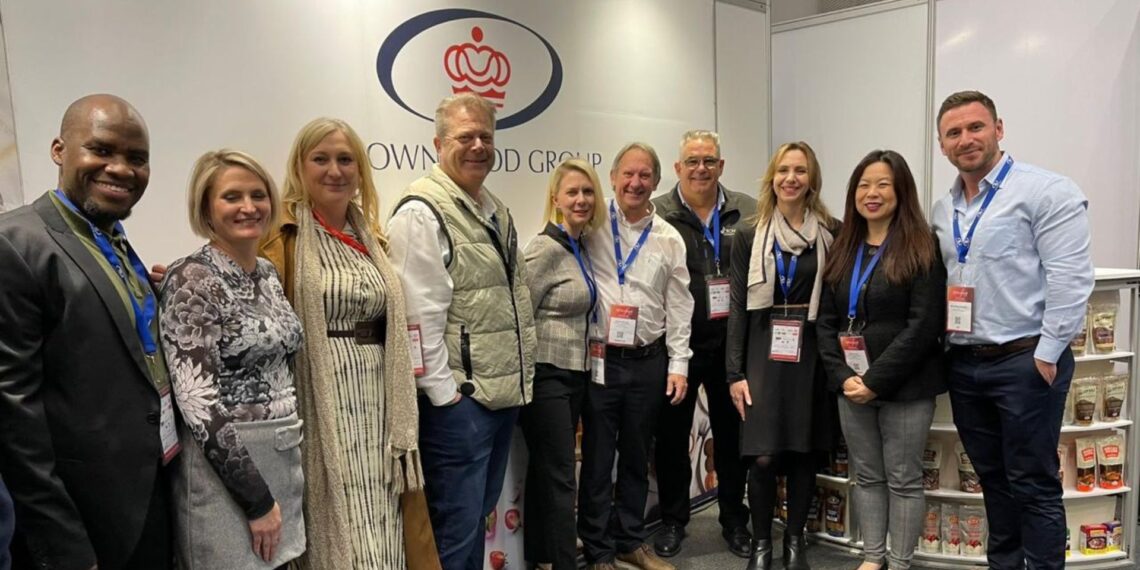
Cape Town is still buzzing following the Africa Food Show hosted at the Cape Town International Convention Centre (CTICC) recently. The three-day gathering brought together the global food industry under one roof.
Attendees included food brands, processing machinery suppliers, policy-makers, importers, exporters, and distributors from across Africa and the world. It was a space for connection and business, where people shared ideas, explored new partnerships, and tasted a wide range of food and beverage innovations.
From packaging solutions to product samples, the event gave visitors a closer look at what’s happening in food production, distribution, and trade.
The summit also featured discussions on regional food security, sustainability, and the growing role of African countries in the global food economy.
Vision for global expansion
Nicole Lau, the product management director at Crown National, said for them, a larger footprint means more market share. This translates to more people enjoying their world-class products globally.
“We look for partners with the same values as ours: empowering employees, fostering innovation, prioritising customer satisfaction, upholding commitment to excellence, and maintaining honesty and integrity.”
Nicole Lau
She added, “We also prioritise safety, health and environmental responsibility, and promote sustainable practice.”
Lau told Food For Mzansi that South Africa is a melting pot of cultures, bringing true flavours of fusion that are uniquely South African. She says Mzansi is a market open to new opportunities, with competencies that are best in class. “Our market is formidable.”
She further noted that Mzansi also has a resilience to make something out of nothing, and values relationships that can continually grow stronger and stronger.
READ NEXT: A taste of tradition: Upgrade your cooking with amasi

Anton Maas, managing director of Meggle Africa and Middle East MDCC, based in Dubai in the United Arab Emirates, spoke during their exhibition at the CTICC.
He said when they look for business opportunities for their brand, they seek shared value, a market-focused approach, a well-defined footprint, and transparency.
“A big focus for us is to re-launch our range of cream products into the food service sector and this will be through one or more distributors. The primary reason for our participation at the show is to identify potential partners,” Maas said.

He noted that infrastructure and technical commercial capabilities also play a big part when meeting new business partners. “With a solid network and both technical and commercial qualifications, he is leading the growth aspirations in SA.”
Maas said Meggle already has a growing ingredient business locally, targeting end users directly as well as making targeted sales to local trading and distributing customers.
Related stories
- From farm to fork: How red meat fuels jobs and plates across SA
- Spice up winter with this yummy sausage & bean stew
- Lafezeka: Natural haircare rooted in power and pride
What local brands look for in global partners
South Africa has a big, diverse population with several income levels and vastly different shopping criteria, said Rain Morgan, the CEO of Turqle Trading. “We’re also a relatively easy country to export to – our rules and regs are ‘soft’ and our consumers are tolerant of highly processed foods.”
Morgan said Turqle Trading’s main market is exports, and they are actively looking to grow their market, particularly in Australia.
“However, we only do business with companies that share our core beliefs of quality above all else, working towards long-term, sustainable trade and fair and ethical business practices.”
Rain Morgan
Meanwhile, Eden Bezuidenhout, marketing and brand coordinator at Aslina Wines, noted that South Africa is a great entry point into the rest of the continent.
“We have strong retail networks, a growing middle class, and people here are really open to trying new things. For international brands, it’s a chance to test the market, build partnerships, and connect with consumers who are curious and looking for something different.”

Bezuidenhout said that at Aslina Wines, they look for partners who align with their values, especially those who understand and appreciate the cultural richness and craftsmanship behind Aslina Wines. Ideally, she added, partners should have strong relationships with their local customer base, a passion for storytelling, and a commitment to quality.
“We value clear communication, shared goals, and partners who are enthusiastic about representing an African-owned, women-led brand on the global stage.”
Eden Bezuidenhout
She further noted that attracting international distributors is always a major milestone for the brand. It validates the global appeal of their wines and helps strengthen their presence in diverse markets while building long-term relationships that support the brand’s global growth.
Celebrating Mzansi’s diversity
Ruby del Mar, an artist and musician based in Southern Suburbs, said attending the Africa Food Show proves that South Africa, and especially Cape Town, holds its value and pride. She explained that walking through the exhibitors gave her the sense that South Africa is like a wedge of a pizza slice: the missing piece in the global puzzle.

“Mzansi, with its diversity of people, businesses, and food choices – especially from the hospitality industry, makes it a great market for the whole world. Food brings people together. It makes us speak the same language and that, for me, is powerful.”
“Developing South Africa as a tourist destination, and showing what we have to offer, is such an amazing move.”
Ruby del Mar
Building a macadamia nut brand
Kate Jarvie, marketing manager at Crack-A-Mac, says their brand is still young at just two years, but their goals are bold and community-driven. Their focus at the Africa Food Show was on attracting international distributors, not only to grow the business but to create impact at home in KwaZulu-Natal.
For her, success goes beyond exports. It’s about building relationships, staying true to values, and uplifting local communities through opportunity and purpose.

“It’s not just about selling nuts overseas it’s about building something bigger that makes a difference here too.”
Jarvie also believes in South Africa’s potential as a launchpad for global products, praising its top-tier resources, strong crop production, and a resilient, creative youth workforce that reflects the country’s untapped entrepreneurial spirit.
READ NEXT: New multi-million rand wine fund backs black-owned brands
Sign up for Mzansi Today: Your daily take on the news and happenings from the agriculture value chain.