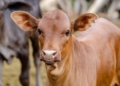
Discover why phosphate supplementation is key to better calving rates, weight gain, and overall health. Molatek’s Foslick and Fosblock have you covered.
As the summer sun breathes new life into South Africa’s green veld pastures, the lush landscape offers a tempting buffet for grazing livestock. However beneath this abundance lies a hidden nutritional gap – one that can deeply affect the health, productivity, and profitability of cattle and sheep.
This is why phosphate supplementation isn’t just a technical requirement, but an act of care for your animals and an investment in their future.
Food For Mzansi spoke to Neale White, technical sales advisor at Molatek, about why phosphate is vital, what happens when there’s a deficiency, and how the right supplementation can transform herd performance.
“Phosphate supplementation in the summer is essential for optimal production and reproduction performance of cattle and sheep on green pastures,” says White.
Why is phosphate supplementation essential?
The impact of phosphate on calving rates and weight gain is undeniable. White explains, “If no phosphate is supplemented, the calving percentage of the herd in a trial was 52.9%, with cows calving every second year only.
The lack of phosphate means that cows spend the year not in calf building up their phosphate reserves again. If cows are properly supplemented with phosphate, the calving percentage increases to 75.6%.
Not only does their dry matter intake increase by 25% but their body weight at calving increases by 15% as well. The average daily gain of cows with proper phosphate supplementation has been shown to increase by 130–320 g/day.
For cattle grazing on young, green pastures, the need for phosphate becomes even clearer. Veld pastures are notoriously phosphate-deficient, leading to dietary imbalances. Products like Molatek Foslick (V16059) and Fosblock (V22502) help address this gap, providing an essential source of phosphate.
Related stories
- Supplement livestock feeding in winter for optimal health
- Boost livestock with supplementary feed this winter
What happens during a phosphate deficiency in sheep and cattle?
The consequences of phosphate deficiency go beyond stunted growth and poor reproduction. During a phosphate deficiency, more phosphate gets absorbed from the skeletal bones than what is built up or stored, White explains.
“It is not only phosphate but also calcium and magnesium that are absorbed from the bone, causing a deficiency in these minerals. The phosphate deficiency therefore also causes a decrease and deficiency in other macro and micro minerals, leading to metabolic disorders.”
In other words, a lack of phosphate creates a domino effect, weakening the bone structure and disrupting vital metabolic processes. This puts livestock at risk for serious health issues that compromise long-term productivity.
What is the correct phosphate intake for cattle and sheep per day?
Different animals have different phosphate needs, and understanding these requirements is crucial:
- Dry sheep: 1–2g of phosphate per day
- Late gestational or lactating ewes: 3–4g of phosphate per day
- Dry cows on green summer pastures: 6g of phosphate per day
- Growing heifers: 9g of phosphate per day
- Late gestational or lactating cows: 12g of phosphate per day
“Sheep recycle phosphate more efficiently through their saliva and graze more selectively on higher-quality pasture,” White explains.
As a result, their phosphate requirement is lower compared to cattle, he adds.
Is there a difference in phosphate sources?
Not all phosphate sources are created equal. “The bioavailability and absorption of phosphate sources will differ, with the absorbability of phosphate in green pastures around 60% and 70% in grain,” says White.
He explains that with commercially manufactured dicalcium phosphate and monocalcium phosphate, the amounts can easily vary between 80–90%.
Molatek uses monocalcium phosphate with a high bioavailability.
Choosing the right phosphate source ensures better absorption, maximising the benefit of every gram of supplementation.
Molatek’s phosphate products: Supporting your herd’s health
Molatek offers two standout phosphate products designed to meet the specific needs of ruminants grazing on green pastures:
- Molatek Foslick: A perfectly formulated, ideally balanced phosphate lick that provides phosphate and seven essential trace minerals. This highly palatable lick stimulates ovulation rates for higher calving and lambing percentages and improves energy utilisation from pastures.
- Molatek Fosblock: A weather-resistant block that supplements phosphate and trace minerals for ruminants on green pastures. It’s easily absorbed by sheep and cattle and ensures high animal performance.
Both the Molatek Foslick and Molatek Fosblock improve animal performance and ensure increased profitability.
READ NEXT: Woolworths inspires KZN farmer to build sustainable, greener farm
Sign up for Mzansi Today: Your daily take on the news and happenings from the agriculture value chain.