Tuesday, August 25, 2026
SUBSCRIBE
22 GLOBAL MEDIA AWARDS
Food For Mzansi
  • News
  • Changemakers
  • Lifestyle
  • Farmer’s Inside Track
  • Food for Thought
No Result
View All Result
  • News
  • Changemakers
  • Lifestyle
  • Farmer’s Inside Track
  • Food for Thought
No Result
View All Result
Food For Mzansi
No Result
View All Result
in Food Trends, Organic Food

5 reasons to eat fresh and local, if you can

by Siyabonga Mngoma
30th June 2020
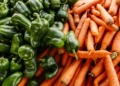
fresh organic vegetables

Fresh organic vegetables are not only delicious, they have many environmental and economical benefits. Photo: Kobus Louwrens

Share on FacebookShare on TwitterShare on WhatsApp

A lot seems uncertain at the moment. With the trajectory of the coronavirus pandemic in South Africa there are so many questions. Will we come out of this a more compassionate society? Will businesses survive? Will the economy recover?

What is still certain is that people must eat. What people eat, where they get their food from or what type of food they eat is a matter of preference for some but not all. Therefore, if you are able to change any one of these things, we encourage you to.

As we contemplate our next meal, let’s consider ways of eating for a healthy planet and reducing our food footprint. Here are some simple ideas to try.

1. Buy local (community based)

Siyabonga Mngoma's organically produced vegetables.
Siyabonga Mngoma’s very own organically produced vegetables. Picture: Supplied

Benefits derived from buying from a local business far surpasses shopping from a big national chain. There is compelling evidence to show that when consumers buy from a local business, the money stays in that community and helps to build the local economy. When it comes to food, one gets to know the person who bakes their bread, the farmer who grows their weekly supply of fresh produce or the person who harvested your honey. You decide if the way they produce your food resonates with you and further supports your value system. More than ever, we really need to boost our economy in South Africa.

2. Buy organic products where possible

While many may be put off by seeing the same produce for a whole season, we can try to find ways of making it exciting by exploring different recipes and flavours. Eating in-season produce boosts our nutrient intake which helps to support our immune system and avoid seasonal sickness like allergies. Growing food organically also helps the earth as there are limited soil and water contamination or greenhouse gas emissions in organic farming. Our best choice for reducing your food footprint? Grow your own!

3. Reduce meat and fish in your diet

Be sure to check the SASSI green list when choosing fish to eat. Picture: Supplied

While some people can’t live without meat, cutting down is encouraged. More and more evidence points to the negative environmental impact in the process of taking meat from farm to fork. For example, more land is needed to farm animals than plants, leading to deforestation. The same with fish. According to the Southern African Sustainable Seafood Initiative (SASSI), unsustainable fishing practices have left fish stocks dangerously depleted and ecosystems altered, which jeopardises several marine species. See the SASSI Green (best choice) list here.

4. Reduce food waste

Buying only what we need is the best way to minimise our food waste and food footprint. Make a food list before you go shopping. Check the pantry to see what you have or don’t have to avoid over-buying. Use food leftovers wisely by making smoothies, baked goods or soups, or simply freeze food for later use. To avoid filling up landfills, create a compost heap or take back your food waste to the farm you buy your produce from.

5. Eco-conscious products

Finally, support businesses that are environmentally conscious. Now more than ever, a lot of businesses are consciously creating clothes, footwear, cosmetics and other household goods. Using materials that have been sourced ethically, you can pretty much find anything in a “green” alternative. These products are usually local, plastic-free and have a low carbon emission footprint.

What has been a humbling experience despite all the uncertainty is seeing food experts, activists, researchers and civil society groups come together to find ways of ensuring that vulnerable communities are able to eat balanced and nutritious meals from their local farmers. Despite the crisis created by the lockdown particularly when it comes to food, these individuals have kept true to seeing a sustainable food system created for South Africa.
Siyabonga Mngoma

Siyabonga Mngoma is the owner of Abundance Wholesome Foods. She is passionate about global food systems and promoting organically grown foods as she believes we can tackle lifestyle diseases through diet. See more of her work on www.abundancewholesomefoods.co.za. You can follow her @abundance_wf on Instagram and Twitter.

Tags: healthy eating habitsorganic vegetablesSiyabonga Mngoma
Food for Thought

How AI and intelligence can shield African farms from El Niño

by Zoë Karl-Waithaka
22nd August 2026

As a strengthening El Niño threatens Africa’s agricultural sector, traditional planning is no longer enough. An expert explains how AI-driven...

Read moreDetails
Fresh FMD outbreaks threaten South Africa’s beef trade just as exports rebound, with Agbiz chief economist Wandile Sihlobo calling for urgent action on biosecurity and vaccine production. Photo: Supplied/Food For Mzansi

Western Cape reaches 82% herd vaccination against FMD

22nd August 2026
Industry role players welcome the handover of the Vrede Dairy Farm but not without reservation. Photo: Supplied

Practical management tips every SA livestock farmer must follow

21st August 2026
Former nurse drives EC agroecology revolution in Ncera Village

Former nurse drives EC agroecology revolution in Ncera Village

21st August 2026
15 000 jobs shed: Why the SA agri sector is feeling the pinch

15 000 jobs shed: Why the SA agri sector is feeling the pinch

21st August 2026

Practical management tips every SA livestock farmer must follow

Market first: How Tshepiso built Blessed and Beautiful Farms

Closing SA’s gender gap in commercial farming success

Nampo Cape expands women’s programme at Bredasdorp Park

15 000 jobs shed: Why the SA agri sector is feeling the pinch

Join Food For Mzansi's WhatsApp channel for the latest updates!

JOIN NOW!
Next Post
Agri SA and its 90 plus affiliates donate tons of food daily to the needy throughout South Africa.

Three things happening in SA agriculture today

THE NEW FACE OF SOUTH AFRICAN AGRICULTURE

With 21 global awards in the first six years of its existence, Food For Mzansi is much more than an agriculture publication. It is a movement, unashamedly saluting the unsung heroes of South African agriculture. We believe in the power of agriculture to promote nation building and social cohesion by telling stories that are often overlooked by broader society.

Beyond maize: Why neglected crops are SA’s climate-smart future

NW agri empowers 110 graduates to fight unemployment

Unstoppable: Double-amputee farmer sets sights on commercial success

How South Africa can stop relying on imported tomato paste

This week’s agri events: 24 – 28 August

Cook once, eat twice: Smart kitchen habits for budget winter meals

  • Awards & Global Impact
  • Our Story
  • Contact Us
  • Cookie Policy
  • Privacy Policy
  • Copyright

Contact us
Office: +27 21 879 1824
News: info@foodformzansi.co.za
Advertising: sales@foodformzansi.co.za

Contact us
Office: +27 21 879 1824
News: info@foodformzansi.co.za
Advertising: sales@foodformzansi.co.za

  • Awards & Global Impact
  • Our Story
  • Contact Us
  • Cookie Policy
  • Privacy Policy
  • Copyright

Chat Options

I'm Lerato, your AI assistant!
No Result
View All Result
  • News
  • Changemakers
  • Lifestyle
  • Farmer’s Inside Track
  • Food for Thought

Copyright © 2024 Food for Mzansi

This website uses cookies. By continuing to use this website you are giving consent to cookies being used. Visit our Privacy and Cookie Policy.