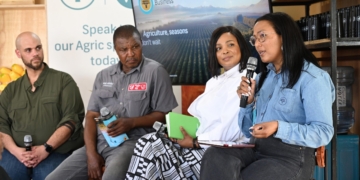
Dr Siphe Zantsi, an agricultural economist at the Agricultural Research Council (ARC), warns that South Africa’s communal and commercial land is feeling the squeeze. In this article, he breaks down the reasons behind the pressure and explores how the department of land reform and rural development, along with the ARC, is working to set clear norms and standards for farm subdivisions.
Land subdivision and the protection of agricultural land have been a topic of debate for a couple of years. In this piece, we provide information on the initial developments towards establishing a multifaceted criterion to guide farm subdivision and the conversion of agricultural land.
With the high rate of population growth (0.8% annually), competing interests, and demand for land, there have been many discussions regarding the conversion of agricultural land for other purposes, such as settlement. This is happening to both communal and commercial farmland and affects all farm types, including both commercial and smallholder farms.
Communal land, which constitutes about 13% of the country’s surface area, is under pressure. More land that was previously used for grazing is now being allocated for settlement, especially in areas near tar roads. This is understandable. As early as 1954, the Tomlinson Commission found that former homelands were too small to accommodate the black African population and their farming activities.
If that was the case when the population was still 14.5 million, one can imagine how the situation has evolved in 2024, with an estimated population of 61 million. Reduced grazing land means the cost of keeping livestock will rise, as farmers will have to purchase supplementary feed to sustain their animals. How can we prevent this situation from escalating?
What about commercial farmland?
Commercial farmland is also under pressure. Part of it is contested for residential purposes, while another portion is redistributed under the Land Reform Policy, particularly to rural communities. For example, in Kokstad, a large commercial farm has been converted into a village comprising a settlement area, grazing land, and arable fields as part of the One Household – One Hectare policy, a component of the Land Reform Policy.
There is also evidence that, in some instances, land reform beneficiaries – particularly those who benefitted from the first programme, the Settlement Land Acquisition Grant (SLAG), commonly known as crowd farming – have informally subdivided agricultural land for settlement and small-scale farming.
Related stories
- Ramaphosa signs controversial Expropriation Bill into law
- Expropriation Act fires up debate as legal battles loom
Furthermore, there is growing advocacy to subdivide commercial farmland purchased by the state for land reform purposes. The aim is to benefit landless groups of previously disadvantaged people and to meet the demand of potential land reform beneficiaries who require small pieces of land for settlement and small-scale farming.
The Land Reform and Agriculture Panel Report, published in 2019, also recommended the subdivision of commercial farms intended for land reform. However, the major question remains: “How do we do that?” The Subdivision of Agricultural Land Act of 1970, prohibits such subdivision, as it states that no agricultural land can be subdivided beyond a viable size.
Sizing up the problem
However, the criteria defining viable size are haphazardly described. For example, only three criteria have historically been considered when evaluating subdivision applications: whether the subdivided land can support 60 large stock units (according to gazetted grazing capacity values), whether it supports 100 hectares of dryland production, or whether it supports 10 hectares of irrigated land with water rights for 20 hectares.
To improve these criteria, the department of agriculture, land reform and rural development (DALRRD) and the Agricultural Research Council (ARC) have launched a project to determine norms and standards for subdividing agricultural land.
These guidelines will also be used when converting agricultural land for other purposes. It is expected that these norms will vary according to land type. For example, the norms and standards for communal land will differ from those for commercial farmland, reflecting the different interests and uses of land in these settings.
This will be a transparent and consultative process involving various stakeholders, including farmer organisations, commodity organisations, traditional leaders, researchers, and other experts. The initial team from ARC and DALRRD comprises an expert panel from all major agricultural disciplines. They will draft these norms and standards and then seek stakeholder input before finalising them as policy. The project is expected to run for two years.
- Dr Siphe Zantsi is an agricultural economist at the Agricultural Research Council (ARC). The views and opinions expressed in this article are those of the author and do not necessarily reflect the views or positions of Food For Mzansi.
READ NEXT: Understanding the Meat Safety Act: What farmers must know
Sign up for Mzansi Today: Your daily take on the news and happenings from the agriculture value chain