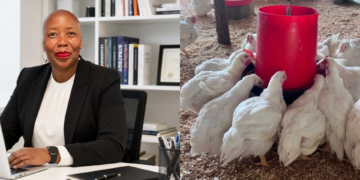
In this Farmer’s Inside Track episode, we take a deep dive into the Meat Safety Act of 2000, a vital piece of legislation for livestock farmers involved in meat production. Jeremiah Jothams, an abattoir management expert, shares valuable insights and practical guidance on compliance, best practices, and what farmers need to know to ensure safe and legal meat processing.
Jothams, who has spent most of his adult life working within the abattoir framework, provides a broad perspective on the industry, spanning red meat, poultry, crocodile, game, and ostrich processing. His primary focus, however, has been on poultry, covering major products such as chicken and niche markets including duck, rabbit, turkey, quail, and guinea fowl.
He stresses the importance of farmers, particularly in rural areas, being aware of and complying with the Meat Safety Act. “Within that legislation, there are various sections and parts of the regulations that form the framework of the act.”
Consequences of non-compliance
Jothams emphasises the need for awareness among farmers as non-compliance could lead to legal consequences. “As with every act or legislation, there are consequences if you don’t comply with it.”
A specific example he provides is in poultry processing. “For example, in poultry, you are not allowed to slaughter more than 50 birds within a month at your own capacity, whether at your household or within your community for various religious acts or other reasons. You cannot exceed 50 units within a month.”
Related stories
- Meat Safety Act: What farmers need to know
- Ethical slaughtering of livestock crucial for animal welfare
- Meat classification: An essential guide for livestock farmers
Failure to comply with such regulations can lead to inspections from municipal, provincial, and state veterinary officials. “If they are made aware that there is illegal slaughtering taking place or processing that does not comply with regulations, they will assess the situation.”
Addressing the issue of livestock that die from disease or old age, Jothams clarifies that such animals are not fit for human consumption. “If an animal arrives at the abattoir already dead, we do not slaughter it. It is immediately condemned, depending on the circumstances.”
Health risks and licensing
He further explains the biological and safety risks associated with consuming such meat. “The whole point of slaughtering is to remove blood from the animal. Once an animal dies on its own, the heart stops pumping, and the blood cannot be properly removed. This poses health risks.”
Farmers seeking to operate within legal slaughtering guidelines must ensure compliance with the Meat Safety Act. “The only thing farmers can do is bring their livestock to a licensed abattoir unless they wish to open an abattoir themselves. Licences are only issued for abattoirs, allowing them to operate legally.”
In this episode, Jothams also discusses:
- Key responsibilities of farmers supplying to abattoirs;
- Livestock traceability; and
- Documentation needed to supply to abattoirs.
Want to know more? Dive deeper into the episode and gain insights from the award-winning Farmer’s Inside Track, officially recognised as Africa and the world’s best podcast at the 2024 Digital Media Awards presented by WAN-IFRA, the global press organisation.
Option 1: Click here to listen on Spotify (all mobile and other devices).
Option 2: Click here to listen on any Apple device.
READ NEXT: Mielies inspire crop farmer Mogale to grow beyond limitations
Sign up for Farmer’s Inside Track: Join our exclusive platform for new entrants into farming and agri-business, with newsletters and podcasts.