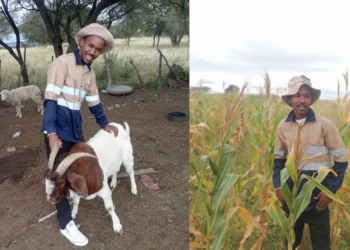
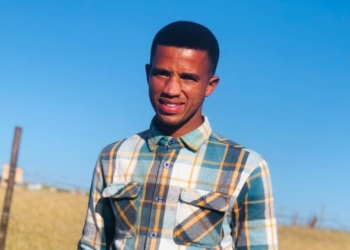
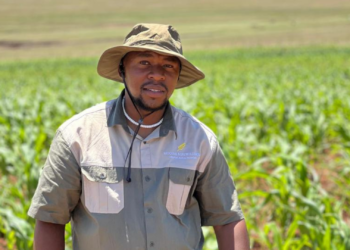
Vuyisile Yende is no ordinary farmer. She’s a matchmaking goat guru, but not in the way you’d think. Forget fancy breed lines, she’s all about the colour and gender of her goats, and traditional healers turn to her for exactly what they need in their rituals.
Born in Orange Farm, she spent her formative years in Deepdale, a small village in Mpumalanga, where her grandmother raised her while her mother worked in Johannesburg.
After finishing high school in Soweto, Gauteng, Yende began her tertiary education journey but encountered substantial challenges that forced her to pivot to a new fateful chapter.
“I enrolled in Sedibeng College and did my M2 in mechanical engineering. Sadly, I had to drop out of school due to lack of finances,” Yende shares.
Her path shifted dramatically after the loss of both her parents while she was still in school, a tragedy that pushed her to turn to farming as a means of survival. Today, she’s the proud owner of Uthingo Elihle Trading Pty Ltd.
Yende says traditional healers showed the greatest interest in her livestock, ultimately becoming her primary clientele for goats.
“With my experience of dealing with traditional healers, it differs with what ceremony needs to be done. For example, to remove bad omens they use black [goats] and sizes differ for ceremonies.

“So there are different types of cleansing [rituals] and they use different colours of goats. As for gender, most believe that when the ceremony is regarding a male figure, a male goat must be used,” she says.
Establishing Uthingo Elihle Trading Pty Ltd
In 2017, Yende’s agricultural journey began modestly by planting spinach to ensure food was on the table. “The produce was big, and I acquired a huge yield. Then I sold the spinach to the community, which they truly loved and were very responsive to the produce,” she recalls.
Rallied by the community’s enthusiastic support, she ventured into livestock farming.
“I started with goats, then managed to have cattle. I now have 15 cattle in total. Adding cattle was an advantage because it is in demand.”
Her business, Uthingo Elihle Trading Pty Ltd, was officially registered in 2020 and has steadily grown, employing three permanent workers and one casual worker. Today, her farm is home to 43 goats and 15 cows. However, her journey has not been without challenges.
Related stories
- Ximba turns hardships into goat milk goodness
- Innovative goat breeding and training propel Mudau to the top
- Faith and farming: The power of prayer fuels Dean’s success
Learning and observing
Yende shares that attending agricultural seminars and workshops has helped her overcome many hurdles she has experienced as a growing farmer.
“Although there were setbacks such as diseases that animals have and the biosecurity in regards to animal safety, I was determined to improve and grow my business. I equip my knowledge by reading and attending seminars and workshops. I also follow farmers on social media platforms to gain knowledge and see what other farmers struggle with,” she says.
Often riddled with her livestock dying from heat stress, Yende had to implement adaptive strategies that included installing shades for her animals and cooling their water during extreme heat. “It was something I learnt from other farmers who had experience. At first, my animals would die from heart attacks caused by heat and other sicknesses.
“I have had no specific mentor but the old guys who have traveled the road before helped and they still do. I always run to them whenever I encounter problems. What helped also was having a partner who is also in farming,” she says.
Despite the male dominance in the farming industry, Yende has proven her tenacity. “Although I have not overcome the challenges yet, I have learned to be consistent, assertive, and know my business.”
Plans to take goat farming further
Looking to the future, Yende is determined to specialise in goat products like goat milk and goat cheese, with ambitions of breeding her stock through artificial insemination.
“In the future, I want to specialise in goat products. Hopefully, I will be able to export to other provinces and internationally as well. I would also like to get my own land since I am renting, and I can’t keep more than 50 goats and 20 cattle,” she said.
Her advice to aspiring farmers is grounded in practical wisdom: “Educate yourselves about the industry, the hindrances, the trends, and the policies you need to know. Have a plan and develop smart goals. Find a mentor and don’t be afraid to ask for help.”


READ NEXT: SA agriculture braces for fallout from Trump tariffs
Get Stories of Change: Inspirational stories from the people that feed Mzansi.