Friday, April 24, 2026
SUBSCRIBE
21 GLOBAL MEDIA AWARDS
Food For Mzansi
  • News
  • Changemakers
  • Lifestyle
  • Farmer’s Inside Track
  • Food for Thought
No Result
View All Result
  • News
  • Changemakers
  • Lifestyle
  • Farmer’s Inside Track
  • Food for Thought
No Result
View All Result
Food For Mzansi
No Result
View All Result
in Inspiration

One goat sparked Sibonelo’s farming future in Vaalkop

Inspired by family, guided by teachers, and driven by determination, Sibonelo Dlodlo turned a childhood love for animals into a growing mixed farming enterprise. Today, he runs Isibonelo So-Mabanga (Pty) Ltd. in Vaalkop, Ladysmith, with goats, maize, chickens, and cattle

by Vateka Halile
24th April 2026
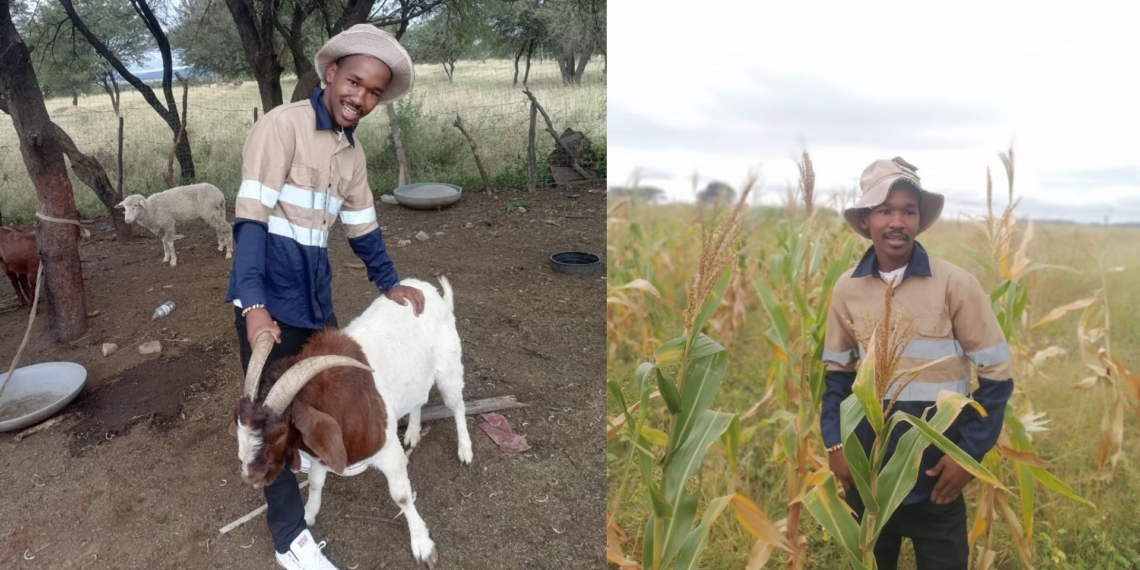
Sibonelo Dlodlo knew what he wanted to become at just 13, when he bought his first goat and grew his business from there. Photos: Supplied/Food For Mzansi

Sibonelo Dlodlo knew what he wanted to become at just 13, when he bought his first goat and grew his business from there. Photos: Supplied/Food For Mzansi

Share on FacebookShare on TwitterShare on WhatsApp

At the age of 13, Sibonelo Dlodlo bought his first goat. Inspired by his parents and grandfather, this early passion led him into agribusiness, where he later established Isibonelo So-Mabanga (Pty) Ltd.  

The mixed farming operation is based on his farmland in Vaalkop, Ladysmith, along the banks of the Klip River, northwest of Durban in KwaZulu-Natal.

In 2022, Dlodlo was 17 and ready to be a farmer, but he had to wait until he turned 18 to officially register his business. His interest started at home, influenced by his family, especially his grandfather, who had more than 200 cattle. 

“I learned cattle vaccination during my primary school days from my grandfather. He would give me tasks over several months and have me keep records,” he recalls.

“My parents also farmed and sold goats, although it wasn’t sustainable.”

FARMER POLL

📢 Which bank is powering your farming journey?

Tell us which bank you use so we can better advocate for the specialised financial tools and accessible capital needed to help South African farmers overcome growth barriers and thrive!

All submissions are kept strictly confidential. 

Nurturing a livestock farming dream

Dlodlo was later motivated at school, where teachers encouraged learners to take agriculture seriously as a career. 

He remembers his agricultural teacher at Ntandoyesizwe High School, Mondli Dlamini, who constantly motivated learners not to look down on agriculture. Dlamini also organised a visit to Cedara College of Agriculture in Pietermaritzburg, where Dlodlo was exposed to livestock farming.

“At Cedara, we were shown different animals and what daily care looks like,” he says.

“My love for animals grew from there. I could already see myself owning livestock and starting a business that would not only help my community, but the country as well.”
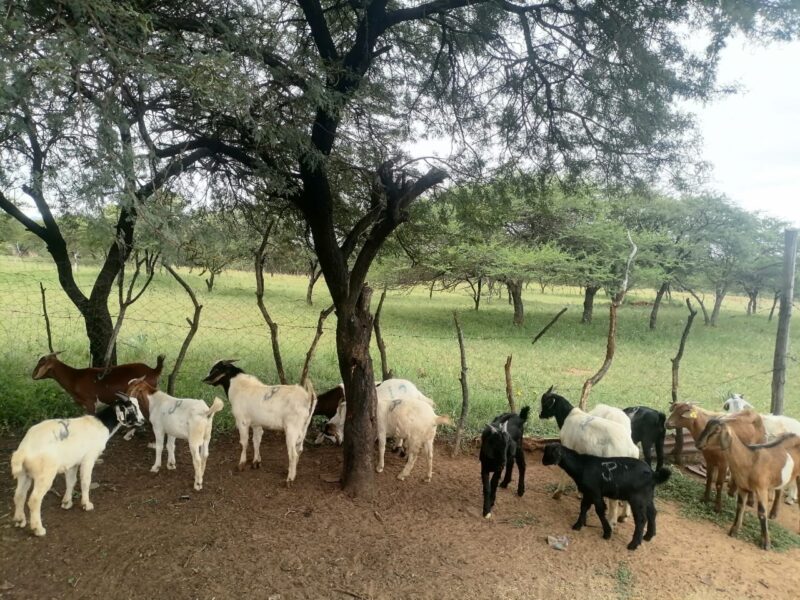
Through the farming community, Sibonelo Dlodlo was introduced to goat breeding, and he quickly recognised both its potential and a gap in the market. Photo: Supplied/Food For Mzansi

During his matric year in 2023, he became more focused on animal science, learning to identify symptoms in sick animals. “At the time, we had goats at home and a few chickens.” 

He began applying what he learned at school to the livestock at home.

Another teacher, Xolani Mbatha, who taught physical science, also supported him, especially in understanding breeding processes. “He guided me step by step on the different career paths within agriculture.”


Related stories
  • Turning goat milk into gold: Farmers tap agro-processing power
  • Hardy goats and hard work are Njabulo’s recipe for success
  • Ditlopo builds future with Boer goats and Brahmans
  • Goat matchmaker Vuyisile finds purpose serving traditional healers

Building his herd and branching out

By the time Dlodlo passed matric, the total herd at home had grown to about 140 goats. Of these, 43 were his, built from the single goat he bought at 13 using his pocket money.

“I applied to the University of KwaZulu-Natal for teaching, dentistry, and agricultural management, but none of my applications was successful,” he says.

“I started losing interest, even on school trips. Instead, I would ask my parents to give me that money so I could buy more goats.”

Another teacher from high school, Thandekile Dlodlo, guided him step by step and helped him register his company after he shared his plans to start an agribusiness.

Over the years, his goats multiplied, and he sold some to reinvest in more livestock. He now farms alongside his family’s goats, as well as chickens and cattle, although most of the cattle are not his and he mainly looks after them.
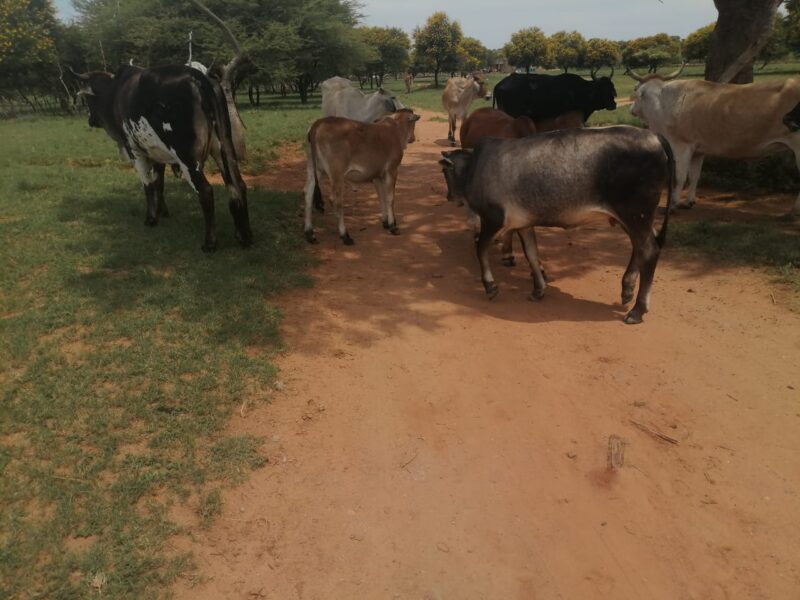
Sibonelo Dlodlo owns some cattle and cares for others on behalf of different owners, a role he says is helping him learn the ins and outs of livestock management. Photo: Supplied/Food For Mzansi

“What is advantageous about goats is that they reproduce twice a year. I have also been fortunate to get twins at times.”

Today, Dlodlo also farms white and yellow maize on his family’s 40-hectare land. The yellow maize is used for chicken feed, while they process white maize into a mealie meal at home. 

He says crop farming is still something he is learning, and maize has become a key part of his step-by-step learning journey in agriculture.

Farming with vision 

In 2024, Dlodlo joined a livestock community of farmers where they built a supportive network. Within that community, he also learned more about breeding. 

He started his own breeding in 2025, working with Nguni goats and Boer goats for meat production.

“But what I noticed is that Boer kids don’t survive as easily as Nguni goats. They are more easily affected by disease,” he says.

He explains that, however, Boer goats produce high-quality meat that is in strong demand. They breed well and can produce kids more than once a year under good conditions. 
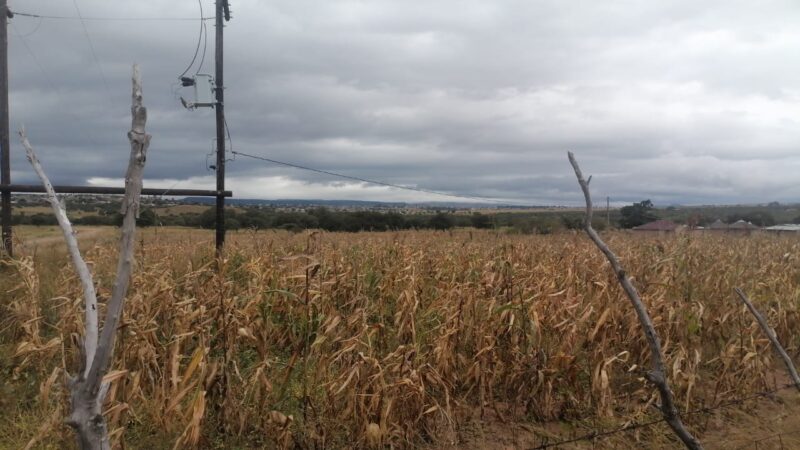
Sibonelo Dlodlo also farms yellow maize, which helps as a chicken feed, and some is used to make homemade mealiemeal. Photo: Supplied/Food For Mzansi

Dlodlo also notes that Boer goats are generally strong and adaptable to tough farming conditions. “They often give birth to twins, which increases herd growth.”

Going forward, he is looking to expand his breeding and explore what the farming world still has to offer. However, he is clear about one thing: he wants to obtain an agricultural qualification.

He is also focused on building his community and hopes to employ people through Isibonelo So-Mabanga (Pty) Ltd. Ultimately, he envisions not only selling live goats but also establishing his own abattoir in the future. 

READ NEXT: Taking chances pays off for NW livestock farmer

Sign-up for the latest agricultural news delivered straight to your inbox every day with Mzansi Today!

Vateka Halile

Vateka Halile grew up in rural areas of Cofimvaba in the Eastern Cape. She was raised in a traditional family setting and found writing to be a source of comfort and escape. Vateka participated in an online citizen journalism course through Food For Mzansi, and her passion for health and medicine-related stories was born. Her dedication to community work and love for social justice and solidarity spaces is evident in her quality time with the community when she isn't working.

Tags: Goat farmerInspire meKwaZulu-NatalMixed farmingYouth in Agriculture

Related Posts

Books and broilers: Student builds poultry dream from scratch

Books and broilers: Student builds poultry dream from scratch

20th April 2026
100 ha of hope: Aphiwe revives family farming legacy in Engcobo

100 ha of hope: Aphiwe revives family farming legacy in Engcobo

13th April 2026
Poultry and potatoes power Fort Hare graduate’s farming vision

Poultry and potatoes power Fort Hare graduate’s farming vision

10th April 2026

Big dreams on his ‘Tiny Farm’: Setjhaba’s 300-hectare success

Jobless to boss: Sihle Petela grows jobs and crops in Mthatha

Sabelani Co-op gives Bongani Nkosi purpose and a future

Dignity in the vineyards: How DONUTS wine changed SA farms

Agrolimo Farms: Tebogo turns schoolyards into Soweto’s pantry

Amaranth: Can this supercrop move beyond niche markets?
Lifestyle

Amaranth: Can this supercrop move beyond niche markets?

by Vateka Halile
22nd April 2026

Amaranth offers strong nutritional and farming potential in South Africa, but poor awareness, stigma and weak market access continue to...

Read moreDetails
‘Our power, our planet’: Farmers innovate to protect soil and water

‘Our power, our planet’: Farmers innovate to protect soil and water

22nd April 2026
Global food crisis depends on next planting season

Global food crisis depends on next planting season

22nd April 2026
African organic brands shine at Cape Town expo

African organic brands shine at Cape Town expo

21st April 2026

Idle farmland, hungry nation: A wake-up call for SA

21st April 2026

One goat sparked Sibonelo’s farming future in Vaalkop

‘Our power, our planet’: Farmers innovate to protect soil and water

African organic brands shine at Cape Town expo

New grapevine breakthrough targets disease and drought

Maize farmers tighten defences as Goss’s wilt spreads

Join Food For Mzansi's WhatsApp channel for the latest updates!

JOIN NOW!
Next Post

Bio360 Africa: Turning farm waste into renewable energy

THE NEW FACE OF SOUTH AFRICAN AGRICULTURE

With 21 global awards in the first six years of its existence, Food For Mzansi is much more than an agriculture publication. It is a movement, unashamedly saluting the unsung heroes of South African agriculture. We believe in the power of agriculture to promote nation building and social cohesion by telling stories that are often overlooked by broader society.

Bio360 Africa: Turning farm waste into renewable energy

One goat sparked Sibonelo’s farming future in Vaalkop

Maize farmers tighten defences as Goss’s wilt spreads

Farm women demand faster land reform, end to unfair evictions

NW agripreneur creates condiments with care and purpose

Beyond certification: Fairtrade Africa’s DONUTS agenda

  • Awards & Global Impact
  • Our Story
  • Contact Us
  • Cookie Policy
  • Privacy Policy
  • Copyright

Contact us
Office: +27 21 879 1824
News: info@foodformzansi.co.za
Advertising: sales@foodformzansi.co.za

Contact us
Office: +27 21 879 1824
News: info@foodformzansi.co.za
Advertising: sales@foodformzansi.co.za

  • Awards & Global Impact
  • Our Story
  • Contact Us
  • Cookie Policy
  • Privacy Policy
  • Copyright
No Result
View All Result
  • News
  • Changemakers
  • Lifestyle
  • Farmer’s Inside Track
  • Food for Thought

Copyright © 2024 Food for Mzansi

This website uses cookies. By continuing to use this website you are giving consent to cookies being used. Visit our Privacy and Cookie Policy.