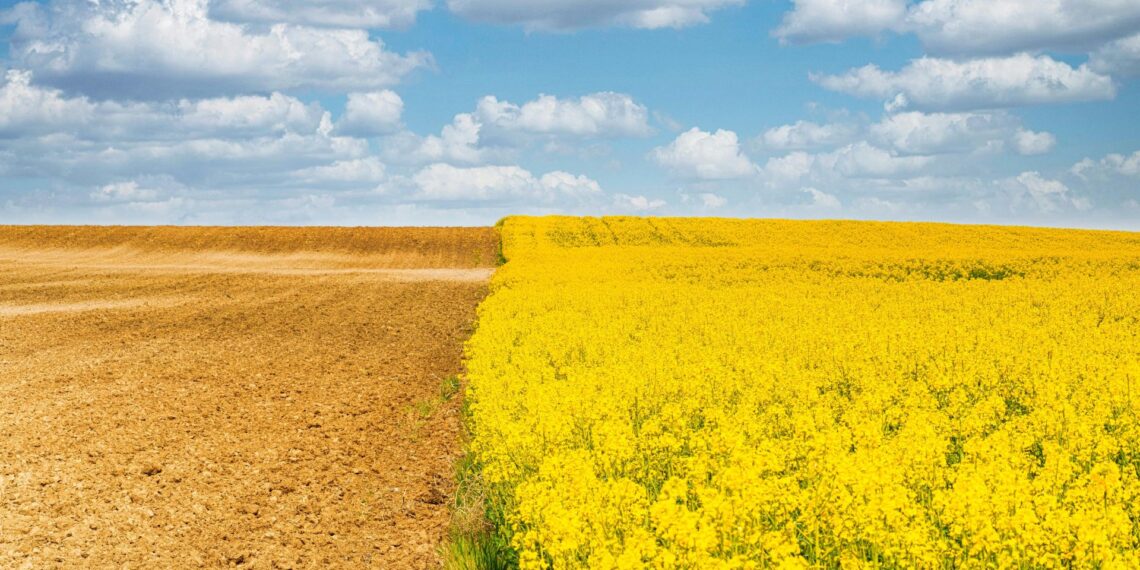
South Africa’s canola farmers face a turbulent harvest season as climate change brings opportunities and challenges. Unpredictable weather patterns, from excessive rainfall to sudden dry spells, are impacting yields and shaping the future of this crucial agricultural sector.
With farmers and scientists racing to adapt through innovative practices and climate-resilient crop varieties, the canola industry is navigating a path toward sustainability amid growing environmental pressures. As harvest efforts continue, experts weigh in on the successes and setbacks of this year’s crop and the evolving strategies to ensure the industry’s resilience.
Pieter de Jager, a seasoned grain producer in the Western Cape, paints a complex picture of weather conditions this year.
“We’re in the middle of harvest, or we’ve harvested about 30% of the canola throughout South Africa. No one has finished harvesting yet, so it’s still not finished,” he said.
Impact of weather patterns
The growing season was marked by a rollercoaster of weather patterns, beginning with overly wet conditions in April, followed by a critical six-week dry spell.
De Jager said the germination of the seeds was very good, though subsequent months brought their own challenges. Heavy and persistent rainfall returned in June, coupled with lower-than-average temperatures in July and August. According to De Jager, these conditions prolonged blooming, resulting in more seed pods and higher potential yields.
“At the moment, for the last couple of days, we can’t get into the fields. So that’s also a way how the climate affects the canola,” De Jager said.
Related posts
- Canola industry blooming with opportunities
- Southern Oil digs deep into the opportunities in canola farming
Dr Johann Strauss, a senior scientist in sustainable cropping systems at the Western Cape department of agriculture, echoed De Jager’s concerns while offering a regional perspective.
“We’re currently harvesting. Some of the canola in the southern Cape is doing really well,” he said.
He expects the province’s average to be around two tonnes per hectare. Strauss noted that canola in areas like Swartland has faced setbacks due to a late and cold start. Wet conditions slowed growth, and a subsequent dry spell affected soil and nutrient management.
“The yields are not as good as they can be,” Strauss said, adding, “It’s still early days. The canola is still being harvested at this stage.”
Adapting to climate change
Gerdus Steyn, senior manager for seed at Sentraal-Suid Co-operative (SSK), explained that the industry is making strides to adapt to climate change, with a focus on developing more drought- and heat-tolerant canola varieties.
“The aim is to develop canola varieties that are more tolerant to drought and extreme temperatures. This is to stabilise the yields over a variety of climate conditions,” Steyn said.
He noted that the threat of pests and diseases is also growing as temperatures rise, prompting breeding programmes to prioritise disease-resistant traits.
“Many canola farmers are adopting practices like no-till farming, cover cropping, and crop rotation to preserve soil moisture, reduce erosion, and improve soil health,” Steyn added.
Despite promising developments, the South African canola industry still faces several obstacles. Production is heavily concentrated in the Southern and Western Cape, making it vulnerable to irregular rainfall and drought.
According to Steyn, the industry also faces competition from imported oils, such as soybean and sunflower oils, which are often cheaper. Imported canola from major producers like Canada further challenges local market share.
“Access to high-quality, canola seed varieties remains a challenge. Expanding processing will strengthen the local industry but high investment costs could set barriers,” he said.
READ NEXT: Young SA farmers inspired by China’s agritech innovations
Sign up for Mzansi Today: Your daily take on the news and happenings from the agriculture value chain.