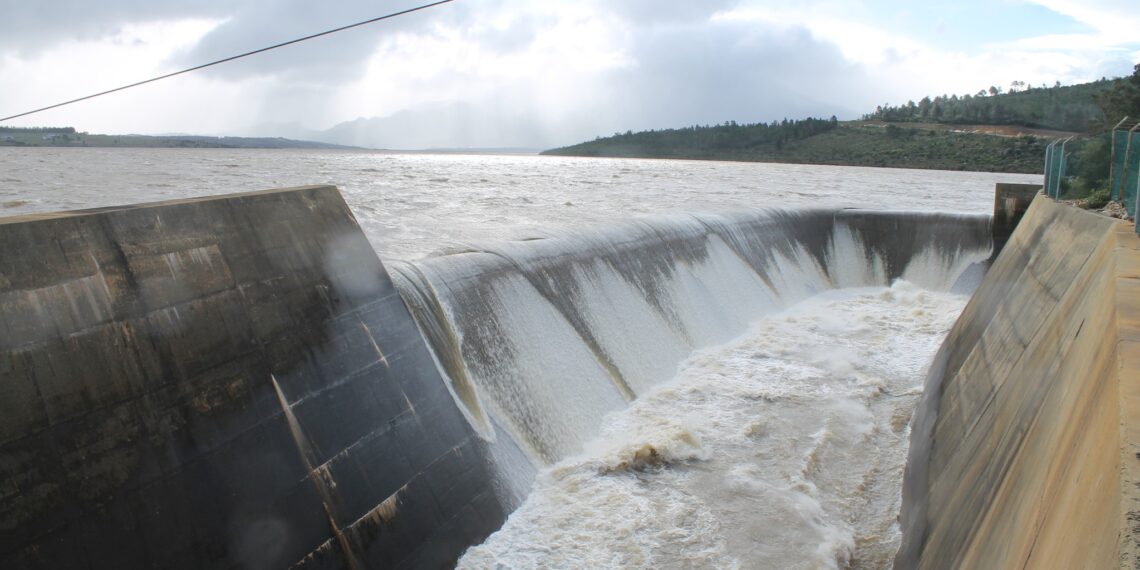
The inland water sources that provide drinking water, support agriculture and sustain ecosystem health in the Western Cape are in a state of decline – posing significant risks to ecological reserves, agricultural production, infrastructure and economy.
For residents, this means a greater likelihood of water restrictions in the coming years if this status is not reversed and the resilience measures being implemented fail.
The over-allocation from the Western Cape Water Supply System (WCWSS), as was confirmed in the report, means that even when dams are full, there might not be enough water to meet demands across households, agriculture and industry.
In unpacking the Western Cape government’s 2024 State of the Environment Outlook Report, the recently released Inland Water chapter shows an overall declining state of the province’s water inland resources, with a growing population that both depends on and places increasing pressure on these inland water ecosystems.
Inland water refers to all water in natural and manmade inland water bodies and the immediate riparian habitat interacting with those water bodies. The province’s inland water being in a state of decline means that water availability and the fitness of water use were found to be insufficient.
The report assessed the state of Western Cape’s water resources, water availability, ecological systems and resulting development potential, to make this determination.
Increasing water scarcity in the region
Authors Dr Francini van Staden from the provincial Department of Environmental Affairs and Development Planning, and Melissa van Lintnaar-Strauss from the national Department of Water and Sanitation (DWS), state that in the face of increasing water scarcity in the region, water resilience has been recognised as a provincial priority.
Water scarcity impacts the reliability of the supply, increasing the risk that residents might face intermittent water shortages, or in severe cases, a complete lack of access to water.
A key finding from the report is that while management of the Western Cape water systems has improved, the high demand for water consumption and various long-term water quality issues have worsened in recent years.
Individual analyses of each dam within the WCWSS revealed that the yields of several dams are significantly affected by the current spread of invasive alien plants. Theewaterskloof and Voëlvlei dams were found to be especially affected by this, experiencing the most pronounced reductions in yield.
The WCWSS supplies raw water to the City of Cape Town; the West Coast District Municipality for domestic supply to the Swartland, Drakenstein, Saldanha Bay and Berg River local municipalities; the Stellenbosch local municipality to augment the supply to Stellenbosch; and agricultural users downstream of the Berg River Dam, Voelvlei Dam and Theewaterskloof Dam.
Individual analyses of each dam within the WCWSS revealed that the yields of several dams are significantly affected by the current spread of invasive alien plants. Theewaterskloof and Voëlvlei dams were found to be especially affected by this, experiencing the most pronounced reductions in yield.
But, the future planning of the WCWSS is anticipated to witness an increased consideration for groundwater use, which could bolster the supply.
For this to be sustainable, the authors state that it is imperative to address various challenges associated with groundwater resource management concurrently with a “geoethical approach” to development efforts.
Water reuse and desalination processes are also expected to play pivotal roles in securing long-term water availability; however, the report warns that it requires feasibility and planning studies to ensure readiness for future water demand projections.
Related stories
- Hopes fade for La Niña rain as drought fears increase
- Drought insurance for smallholder farmers unveiled
Impact on jobs and the economy
The declining state of the Western Cape water inland resources has an impact on jobs and the economy in the province.
The Western Cape government’s Growth for Jobs Strategy notes that the province faces significant vulnerability to water shortages, and 52% of its GDP is attributed to agriculture and agri-processing industries.
The report states: “The inadequacy of water poses a severe threat to these industries even before considering its impact on other sectors. Economic modelling of a water crisis vividly illustrates its repercussions on the Western Cape’s GDP and employment.
“In the event of a water crisis with a few months of stringent usage restrictions, the Western Cape GDP could decrease by 2.3%, affecting around 49,000 jobs.”
If the crisis lasts more than a year and rigorous restrictions are enforced, this impact increases to 9.3%, potentially affecting almost 215,000 jobs, according to the report.
Van Staden and Lintnaar-Strauss found that agricultural water is already fully allocated – necessitating the development of alternative sources and improved efficiency. But, the future outlook is that there is no “new” water to satisfy agricultural demand in the Western Cape, which would have to be approved in future by the DWS.
Water catchments are under severe pressure
The wetlands across the Western Cape are also facing considerable pressure because of agricultural practices and the high volume abstraction of groundwater. This is necessitating the development of alternative sources and improved efficiency.
One case of this is the Sandveld region, which is affecting groundwater supplies and, cumulatively, wetlands.
Then in densely populated regions of the Western Cape, river sites show poor conditions owing to inadequate management of sewage treatment works and carrying capacities being exceeded, with a cumulative impact on freshwater ecosystems.
Van Staden and Lintnaar-Strauss said water catchments are under severe pressure, with 65% of South Africa’s 792 wetland ecosystems classified as “threatened”, and 48% deemed critically endangered.
“The average domestic water usage in South Africa is 233 litres per person/day, significantly higher than the global average of approximately 180 litres per person/day (AquaStat, 2023). This contributes to the perception that South Africans may not sufficiently value or recognise the imperative to conserve water,” they said.
Persistent challenges despite recent gains
On what gains have been made since the last report Van Staden and Lintnaar-Strauss said the Western Cape’s planning has improved, specifically for water availability, after key lessons learnt from the provincial drought event from 2015 to 2019.
It was because of this strategic planning and management together with good rainfall since 2019 – above average rainfall in 2023 – that no major water use restrictions have been put in place in recent years.
However, the province still faces a persistent water resources deficit, coupled with the need to allocate water for ecological reserves, which act as a buffer for social and economic resilience.
The report states that infrastructure degradation remains far from being fully addressed as a threat in the Western Cape, and this not only jeopardises the functionality of critical water systems but also contributes to ecosystem degradation.
The main drivers identified behind the decline in the state of inland water are climate change, human settlements (and associated population dynamics like population growth, pollution of water resources stemming from urban populations, poverty, human behaviour and the management of settlements and water use/discharge from settlements), water and land regulation, including compliance with legislation.
Van Staden and Lintnaar-Strauss said that the pressures resulting from these drivers are over-abstraction, illegal abstraction and discharges to inland water that degrade quality and destroy ecosystems in and around inland water.
This article was first published by Daily Maverick.
ALSO READ: Lesotho Highlands shutdown: Govt assures sufficient water supply
Sign up for Mzansi Today: Your daily take on the news and happenings from the agriculture value chain.