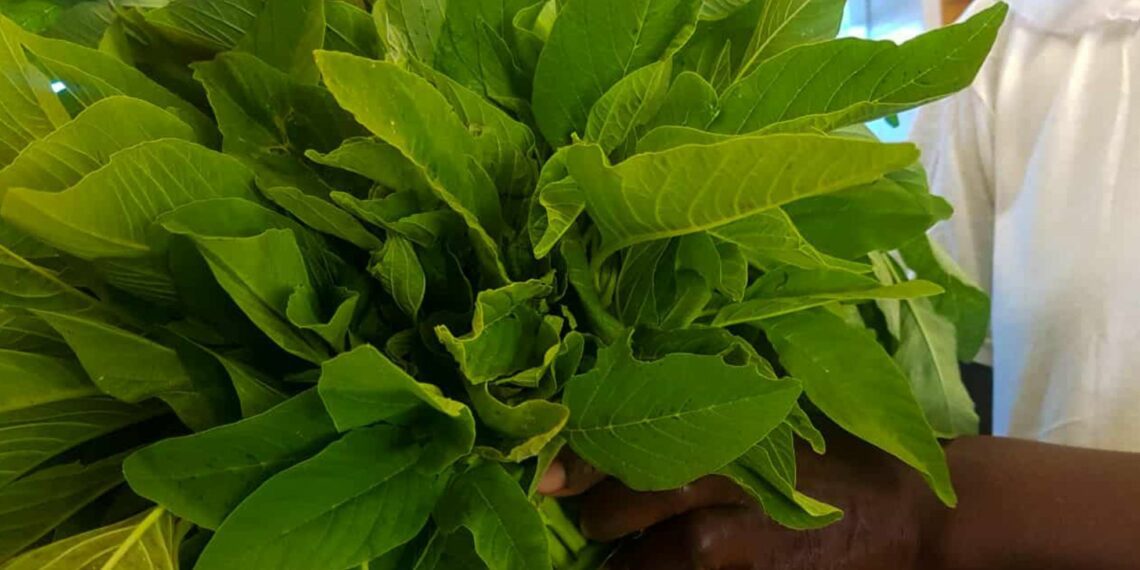
As El Niño brings hotter temperatures and erratic rainfall across Southern Africa, staple crops like maize face severe losses. ARC researchers highlight how nutrient-dense indigenous leafy vegetables offer smallholder farmers a low-input, drought-tolerant lifeline for household nutrition and steady market income.


As Southern Africa experiences more frequent droughts, heat waves, and erratic rainfall patterns, smallholder farmers face growing challenges in producing enough food for their families and generating income from agricultural products.
During El Niño years, these challenges worsen, reducing crop yields, worsening water shortages, and driving up food prices. In the face of these climate-related challenges, indigenous leafy vegetables offer a practical and sustainable solution for improving food, nutrition and income security.
Understanding El Niño and its impact on agriculture
El Niño is a naturally occurring climate phenomenon that disrupts normal weather patterns and often leads to below-average rainfall and higher temperatures across many parts of Southern Africa. These conditions can have devastating effects on rain-fed agriculture, particularly for resource-constrained smallholder farmers.
Staple crops such as maize often suffer significant losses during drought periods, leaving many households vulnerable to food insecurity. Therefore, there is a growing need to adapt and promote crops that can withstand harsh environmental growing conditions and continue producing under limited water availability and extreme temperatures.


Why indigenous leafy vegetables matter
Indigenous leafy vegetables are plant species that have been grown and consumed by local communities for generations. Unlike many exotic vegetable crops, these vegetables have evolved under local environmental conditions and possess natural adaptations to heat, drought, and poor soils.
Their ability to grow with minimal inputs makes them particularly suitable for smallholder farming systems. In addition to their resilience, indigenous vegetables are rich in essential nutrients that contribute to healthy diets and improved livelihoods.
Related stories
- Indigenous crops: The climate-smart superfoods we need
- Indigenous crops hold key to sustainable agriculture in SA
- Drought: Protect your farm and mitigate weather impacts
- Climate risk is business risk: How farmers can prepare for El Niño
Advantages of indigenous leafy vegetables include:
- better adaptation to drought and high temperatures,
- lower water requirements than many conventional vegetables,
- rapid growth and short production cycles,
- high nutritional value,
- low production costs,
- potential for household consumption and income generation
Indigenous leafy vegetables suitable for El Niño conditions
Several indigenous vegetable species have demonstrated remarkable resilience under water-limited environments.
Amaranth (Amaranthus spp.)
Amaranth is one of the most promising indigenous leafy vegetables for drought-prone environments. It grows rapidly, tolerates high temperatures, and can continue producing leaves when water is limited. It is gaining recognition as an important leafy vegetable due to its high nutritional value, adaptability, and potential contribution to food security.
The crop is rich in protein, iron, calcium, dietary fibre, and vitamins A and C. Farmers can begin harvesting leaves within four to six weeks after transplanting, making it a valuable source of food during difficult seasons.

Spider plant (Cleome gynandra)
Spider plant is widely consumed throughout Southern Africa and is highly valued for its nutritional properties. The crop performs well under warm environmental conditions and can tolerate moderate drought stress. Its leaves contain substantial amounts of iron, calcium, magnesium, and vitamin A, making it an important vegetable for improving household nutrition.

Cowpea (Vigna unguiculata)
Cowpea serves as both a leafy vegetable and a grain crop, making it particularly valuable during drought periods. The leaves can be harvested for consumption while the crop simultaneously produces grain for later use or sale. It is among the most drought-tolerant crops cultivated by smallholder farmers and can contribute to both food security and soil fertility through biological nitrogen fixation.

Jute mallow (Corchorus spp.)
Jute mallow is a fast-growing leafy vegetable that performs well under warm conditions. It is rich in vitamins and minerals and provides an important source of nutrition during dry periods.

Nightshade (Solanum spp.)
Nightshade is another nutrient-rich indigenous vegetable that is well adapted to local growing conditions. Improved varieties are increasingly available and offer good potential for both household consumption and market sales.

Nutritional powerhouses for healthy communities
One of the most significant advantages of indigenous leafy vegetables is their exceptional nutritional value. Many indigenous vegetables contain higher concentrations of essential nutrients than commonly consumed exotic vegetables.
These nutrients include vitamin A, which is important for eye health and immune function; vitamin C, which strengthens the immune system; iron, which is essential for preventing anaemia; zinc, which supports growth and immunity; dietary fibre, which promotes digestive health; and plant proteins that contribute to balanced diets. In rural communities where access to diverse foods may be limited, indigenous vegetables can play a critical role in combating malnutrition and improving overall well-being.
Economic opportunities for farmers
The growing interest in healthy and sustainable diets is also creating new market opportunities. Indigenous leafy vegetables can be sold fresh in local markets, supplied to schools and community feeding schemes, or processed through drying for off-season consumption, and because production costs are generally low, farmers can generate income while improving household nutrition.
Researchers from the Agricultural Research Council and government departments are working with communities to improve seed availability, production methods and consumer awareness of indigenous crops.
Figure 7: Farmers’ field day and participatory variety selection for adaptability at Makhathini
Water-smart production practices
Although indigenous leafy vegetables are naturally resilient, farmers can further improve productivity through simple water-conservation practices.
- Mulching
Applying dry grass, crop residues, or leaves around plants helps reduce soil moisture loss through evaporation. Mulching also suppresses weed growth and improves soil health.
Figure 8: Grass and sawdust mulching
- Organic matter application
Incorporating compost or well-decomposed manure improves soil structure and increases water-holding capacity, allowing crops to better withstand dry periods.
- Rainwater harvesting
Collecting rainwater from rooftops and storing it in tanks or containers can provide valuable supplementary irrigation during dry spells.
Figure 9: Rainwater harvesting from wetland to tanks
- Efficient irrigation
Where water is available, drip irrigation or bucket irrigation systems can maximise water-use efficiency by delivering water directly to plant roots.
Indigenous vegetables and climate resilience
As climate change continues to affect agricultural production, there is growing recognition of the role indigenous crops can play in building resilient food systems. Indigenous leafy vegetables contribute to climate-smart agriculture, sustainable food production, agricultural biodiversity conservation, improved dietary diversity, and enhanced resilience to drought and heat stress.
Conclusion
Indigenous leafy vegetables are more than traditional foods. They are climate-smart crops that can enhance food security, improve nutrition, increase farmer resilience, and support sustainable agriculture. As communities prepare for future El Niño events and increasing climate uncertainty, embracing these resilient crops may be one of the most effective steps toward a food-secure and nutritionally healthy future.
- By Lindiwe Khoza, Nkamoheng Lecholocholo, Princess Mngomezulu, Abe Gerrano and Mariette Truter of the ARC. The views and opinions expressed in this article are those of the authors and do not necessarily reflect the views or positions of Food For Mzansi.
READ NEXT: Why smart tech is key to solving Africa’s post-harvest losses